\"Trans Geographies of Joy\" — A Book by Elias Capello on Trans Community Building in Atlanta
An ethnography of Atlanta's trans community and its resistance to white supremacy and transphobia.
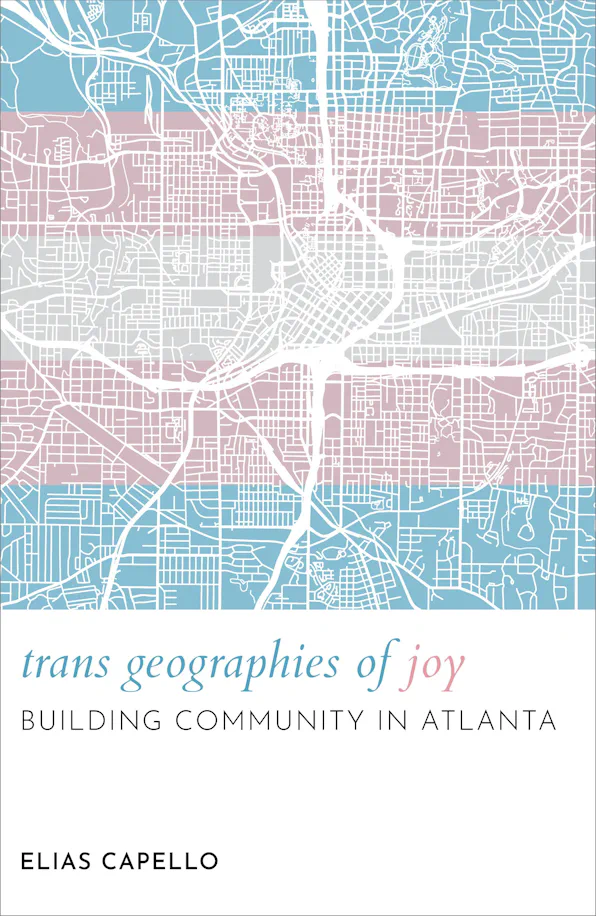
In June 2026, NYU Press published the book “Trans Geographies of Joy: Building Community in Atlanta” in English. The author is Elias Capello, professor of anthropology in the Liberal Arts Department at the Savannah College of Art and Design (SCAD) in Atlanta. He received his PhD in anthropology from the University of Massachusetts Amherst in 2021. His research focuses on trans communities and queer activism in the Deep South, drawing on feminist, decolonial, and queer theoretical frameworks.
The book is an engaged ethnography. Ethnography is a research method in anthropology in which the researcher studies a community from within over an extended period, through observation, interviews, and personal participation in the life of the group. Capello documents the stories and organizing efforts of trans activists in Atlanta, particularly Black and Latinx trans people, who confront the intersecting forces of white supremacy and transphobia in the context of the American Deep South.
One of the book’s central arguments is that colonialism, white supremacy, and cisnormativity are interconnected through shame. Cisgender refers to people whose gender identity matches the sex they were assigned at birth. Capello shows how cisgender culture embeds itself within whiteness, constructing narratives that privilege cisgender lives while marginalizing trans existence.
Rather than centering trauma and suffering, Capello deliberately focuses on joy, safety, and flourishing. The book describes how activists create art, spaces, and communities grounded in collective care. To conduct the research, the author used ethnographic interviews, participant observation, participatory mapping, and autoethnography — a method in which the researcher reflects on their own experience as part of the scholarly material.
The book contributes to a growing academic conversation about how race, gender, and class intersect under conditions of systemic oppression. It offers a perspective not only on the politics of survival but also on the politics of creation — on how trans people build lives worth living in an often hostile social environment.