Two Same-Sex Couples Sue Slovak Authorities Over Refusal to Recognise Austrian Marriages
In October 2026, two same-sex couples in Slovakia filed lawsuits against state authorities, challenging the government’s refusal to register their marriages legally performed in neighbouring Austria. The applicants seek official recognition of their marital status, relying on a precedent-setting judgment by the Court of Justice of the European Union (CJEU) that obliges EU member states to recognise unions lawfully concluded elsewhere in the bloc to safeguard freedom of movement.
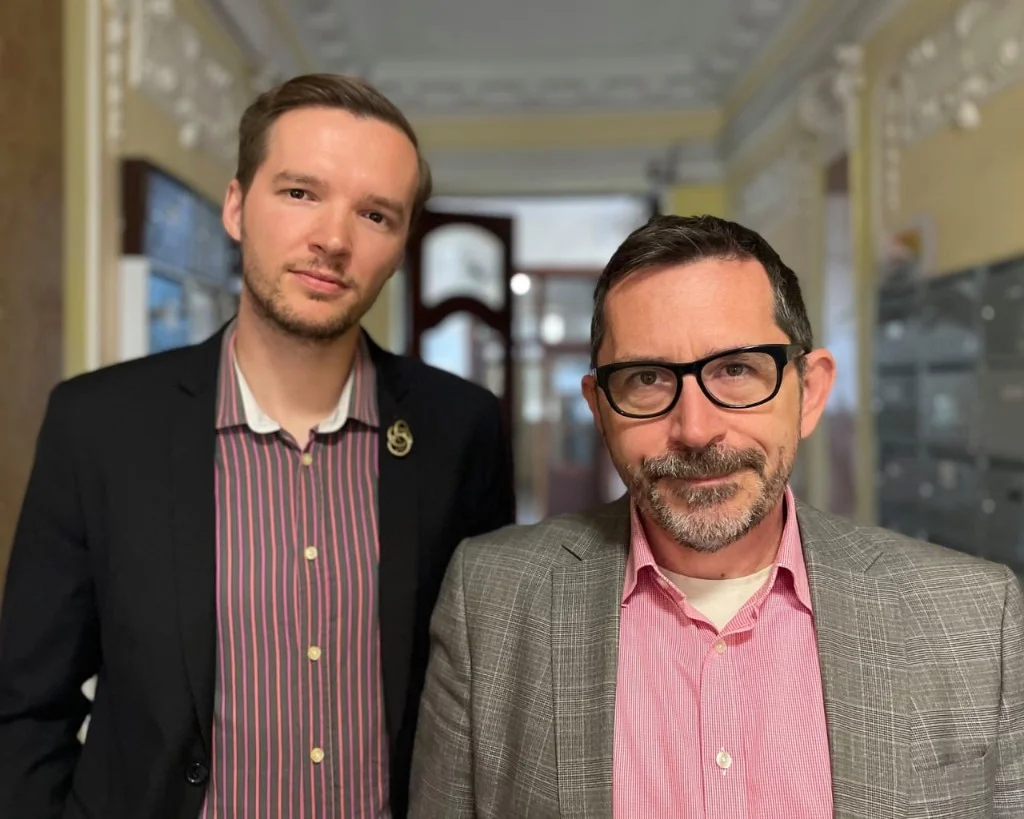
The plaintiffs include lawyers and former Slovak diplomats Ivan Novotný and Metod Špaček, who married in Austria in 2020, as well as Slovak public radio presenter Marián Žáry Kukelka and his partner Ondrej, who wed in 2023 in the Austrian border town of Hainburg an der Donau. The couples emphasize that their aim is not to rewrite Slovakia’s domestic marriage laws or force the introduction of same-sex marriage within the country. Instead, they seek entry of their marriage certificates into the Special Registry (Osobitná matrika)—a centralised civil records registry operated by the Slovak Ministry of the Interior that records vital events occurring to Slovak citizens abroad. According to the couples, the state’s refusal leaves them without fundamental legal protections regarding medical decisions, inheritance rights, and official identity documents, including the use of a shared married surname.
According to The Guardian, the couples’ legal claims draw upon a November 2025 CJEU ruling in Cupriak-Trojan and Trojan v Wojewoda Mazowiecki, concerning a Polish same-sex couple who married in Berlin. The EU’s highest judicial authority ruled that member state authorities cannot deny legal effect to personal status lawfully established in another EU nation when citizens have exercised free movement and built a family life abroad. While the judgment does not compel conservative member states to legalise same-sex marriage domestically, it mandates an effective, non-discriminatory mechanism for recognising statuses lawfully obtained in partner EU nations.
Slovakia’s Interior Ministry, led by Minister Matúš Šutaj Eštok, rejected the couples’ applications, citing the country’s Constitution, which has defined marriage exclusively as a union between a man and a woman since 2014. The ministry stated that administrative agencies are bound by domestic statutes and cannot substitute their discretion for legislative action. Interior officials added that ensuring freedom of movement does not require transcription of the relationship as a marriage under national law. Slovak Prime Minister Robert Fico has repeatedly opposed EU judicial rulings on family policy, pledging to enact secondary regulations preventing the domestic recognition of such foreign marriages.
Slovakia recognises neither same-sex marriage nor registered civil partnerships. A 2014 constitutional amendment defines marriage strictly as a union between a man and a woman, and subsequent legislative proposals to create civil partnerships have repeatedly been voted down by the National Council. Cohabiting same-sex couples retain only limited rights, primarily regarding inheritance and next-of-kin status in narrow contexts.
Urania previously reported in August 2026 that the Slovak Interior Ministry had officially refused to recognise the Austrian marriage of Novotný and Špaček, despite a formal warning from the Prosecutor General’s Office concerning administrative delays and reminders from the European Commission regarding the primacy of EU law. The publication has also closely tracked similar legal battles across Central Europe, including decisions by Polish courts and the government to recognise marriages entered into by citizens in other EU member states.