1930s Research by Chinese Sexologist Li Shiu Tong: Magnus Hirschfeld’s Partner Was Decades Ahead of His Time
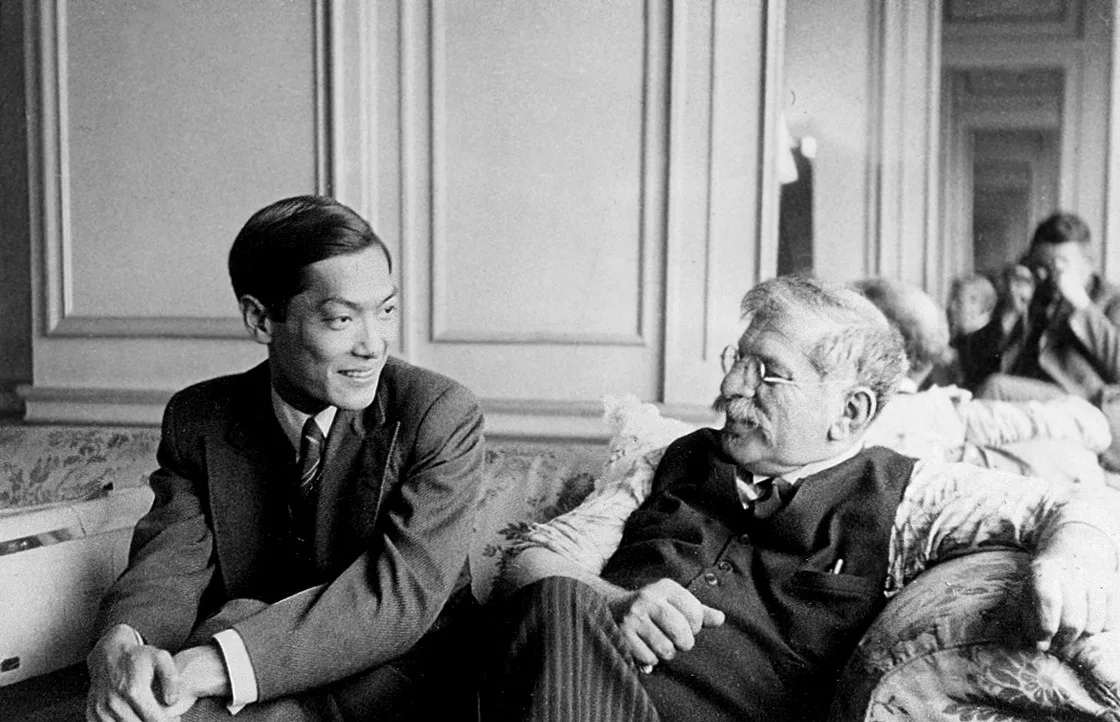
In October 2026, historians and sexology researchers brought renewed attention to the scientific legacy of Chinese-Canadian sexologist Li Shiu Tong (1907–1993), whose observational studies on human sexual diversity from the 1930s through the 1950s anticipated modern findings by decades. Long treated merely as a footnote in the shadow of his famous mentor and partner, German physician Magnus Hirschfeld, Li’s own writings offered a radically expansive perspective on the prevalence of homosexuality and bisexuality.
As reported by American media outlet LGBTQ Nation, Li was a 24-year-old medical student when he met the 63-year-old Hirschfeld during the German reformer’s 1931 world lecture tour in Shanghai. Li joined Hirschfeld as an assistant and traveling companion across East Asia and the United States, developing both a romantic and professional bond. Following the Nazi seizure of power in Germany in 1933 and the destruction of the Berlin Institute for Sexual Science, Hirschfeld was forced into exile in France alongside Li. In his 1935 will, Hirschfeld named Li and fellow activist Karl Giese as his sole heirs and custodians of his intellectual work.
For decades, historians assumed that Li had abandoned sexological inquiry after Hirschfeld’s death in Nice. However, in the early 2000s, Ralf Dose, co-founder of the Berlin-based Magnus Hirschfeld Society, traced personal archives rescued from a Vancouver dumpster in 1994 by local resident Adam Smith, including Hirschfeld’s death mask, books, and Li’s unpublished manuscript drafts. University of Washington historian Laurie Marhoefer, author of Racism and the Making of Gay Rights (2022), notes that Li spent decades recording observational data on sexual behavior across numerous countries. In his surviving notes, Li estimated that roughly 40% of people were bisexual, 20% homosexual, 30% heterosexual, and 10% exhibited other forms of sexual and gender variation, while also affirming trans identities as a natural and beneficial element of human existence.
These estimates diverged sharply from Hirschfeld’s own view, which held that while homosexuality was a natural biological variation, it remained relatively uncommon. Li’s observations presaged Alfred Kinsey’s landmark surveys of the late 1940s and modern theories of sexual fluidity. At the same time, scholars note that Li’s findings must be treated with historical nuance: only working drafts survive without complete quantitative datasets, and his observational sampling may have reflected the specific circles he encountered. Marhoefer emphasizes that mid-20th-century racial prejudices and Eurocentrism long obscured Li’s standing, relegating him in Western scholarship to the status of an assistant rather than recognizing him as an independent thinker.
Magnus Hirschfeld (1868–1935) was a pioneering German sexologist who co-founded the Scientific-Humanitarian Committee (the world’s first gay rights organization) and the Berlin Institute for Sexual Science. Following Hirschfeld’s passing, Li Shiu Tong studied in Vienna, Zurich, and Harvard, held diplomatic posts, and lived in Canada until his death in 1993, continuing his private reflections on sexology.
Previously, “Uránia” examined the impact of early European sexology and Magnus Hirschfeld on pre-revolutionary thought in an essay on Vladimir Nabokov and Russian queer history.