Sex Reassignment in the Islamic Republic of Iran: A Comprehensive Overview
How it became possible, what Islamic law says, and the statistics on surgeries.
Contents

This article examines why sex reassignment surgery received religious justification in the Islamic Republic of Iran. It also tells the story of Maryam Khatoon Molkara, a person who played a notable role in gaining official recognition for transgender people.
The article then explores how this system works in practice: what Sharia and fiqh say about sex reassignment, which issues Islamic jurists debate, and how state laws describe and regulate the procedure. Finally, it looks at the lives of transgender people in Iran: the stages typically involved in transition, and what is known about the number of such surgeries.
Farsi terminology: how Iranians talk about transgender people
In Persian, the word “jens” (جنس) most commonly means “sex” as the distinction between female and male. From it derives the adjective “jensi” (جنسی) — “sexual.” The word “jensiyat” (جنسیت) is usually translated as “gender,” although it can also denote desire and attraction, so its meaning partially overlaps with “sexuality.”
The term “tarajensi” (تراجنسی) appeared relatively recently. It designates “transsexual.” The prefix “tara-” corresponds to “trans-,” and combined with “jensi” it produces the meaning “transsexual.” In everyday speech, this word more often refers to a person oriented toward surgical sex reassignment.
There is also another variant — “tarajensiyati” (تراجنسیتی). In meaning, it is closer to “transgender” and is perceived more broadly. Many transsexual people in Iran consider transsexuality to be part of a broader transgender identity.
In colloquial speech, the English loanword “trans” (ترنس) is also commonly used.
How the surgeries appeared in Iran: from the 1930s to the 1979 Revolution
Sex reassignment surgeries were performed in Iran as early as the 1930s, well before the 1979 Revolution. One of the first practitioners associated with this was the physician Khalatbari. He is credited with the first such operation in the country: his patient was an 18-year-old named Kobra, who had requested the removal of male genitalia.
At the same time, Islamic jurists were discussing the subject. Initially, the discussion focused primarily on intersex people. In the Iranian context, terms such as “do-jensi,” meaning “two sexes,” and “khuntha” — an Islamic legal term for people with ambiguous sex characteristics — were used.
During those same decades, the future Ayatollah Ruhollah Khomeini — who should not be confused with Ayatollah Ali Khamenei, assassinated in 2026 — was becoming one of the key figures of the opposition to the Pahlavi regime. By the 1940s, he was already a prominent religious figure, and in 1979 he led the Islamic Revolution.
While in exile in Turkey, Khomeini began in 1964 to write a commentary on the book “Wasilat al-Najat,” adding his own rulings along the way. This produced a separate collection of juridical epistles — “Tahrir al-Wasilah.” The book was completed and published in Arabic no later than 1967.
In “Tahrir al-Wasilah,” Khomeini permitted sex reassignment for khuntha (vol. 2, p. 627). His fatwa reads:
It seems that an operation to change sex from male to female is not forbidden (haram) [in Islam], and vice versa, and it is also not forbidden for a khuntha (hermaphrodite/intersex person) to undergo it in order to be assigned to one of the sexes [female or male]; and [if asked] whether a woman/man is obliged to undergo a sex change operation if the woman discovers in herself [sensual] desires similar to male desires, or some signs of masculinity in herself — or a man discovers in himself [sensual] desires similar to those of the opposite sex, or some signs of femininity in himself? It seems that [in such a case], if the person truly [physically] belongs to [a certain] sex, a sex change operation is not obligatory, but the person is still entitled to change their sex to the opposite one.
This fatwa pertained to khuntha, not to transgender people. In 1976, before the Revolution, the Medical Council of Iran ruled that sex reassignment surgeries were permissible only in cases of intersex variations. After the Revolution, this position was largely maintained.
Maryam Molkara and Khomeini’s fatwa
In 1986, after the Revolution, Khomeini reaffirmed the permissibility of sex reassignment given a medical certificate for khuntha and issued another fatwa — this time in Persian and now applicable to transgender people.
The turning point was the story of Maryam Khatoon Molkara, who was assigned male at birth.
Before the Revolution, Maryam — then going by the male name Fereydoun — worked at Iranian state television. She wore women’s clothing and once appeared on a psychologist’s programme to tell her story. According to her, she had felt like a girl since childhood: she played with dolls, tried on women’s clothes, and prayed for God to free her from her male body. The psychologist explained that this was not homosexuality but transgenderism, and proposed sex reassignment surgery.
As a religious person, Maryam turned to Ayatollah Behbahani, one of the prominent spiritual authorities in Tehran. He advised her to write to Khomeini. The answer was negative: according to Khomeini, sex reassignment was permitted only for khuntha. Around the same time, Maryam also tried to appeal to Farah Pahlavi, the former Queen of Iran, but received no help.
After the Revolution, Maryam recounted that she was forced to give up women’s clothing, compelled to take hormones to look “masculine,” and dismissed from her job. During the Iran–Iraq War, she volunteered as a nurse near the front lines.
Later, Maryam approached Ahmad Jannati, one of the influential conservatives of the new regime. She told him about her situation and asked for tolerance towards transgender people. He again advised her to write to Khomeini. The second letter also yielded no result. Maryam then decided that her case had simply not been understood, and attempted to explain everything in person: she was a transgender woman “trapped” in a male body.
It took her eight years to secure a personal audience. She came to the meeting in a man’s suit, with a copy of the Quran in her hands, and her shoes hung around her neck. The guards attacked and began beating her. Khomeini’s brother saw this, stopped them, and led her into the Ayatollah’s sitting room.
Khomeini listened to Maryam, then consulted with three doctors, and after about half an hour issued his fatwa. It stated that Maryam and other transsexual Muslims were permitted to undergo sex reassignment surgery. When she asked whether this was acceptable from the standpoint of Islam, he replied:
There is no Islamic obstacle to sex reassignment surgery if it is approved by a reliable physician.
Immediately afterwards, Maryam was given and helped into a chador (a woman’s covering), even though the surgery had not yet been performed.
The 1986 fatwa was worded as follows:
In the name of God. Sex reassignment surgery is not forbidden in Sharia if it is recommended by reliable physicians. Inshallah you will be safe, and I hope the people you mentioned will take care of your situation.
Maryam herself was only able to have the surgery in 1997. Her persistence significantly changed the situation for transgender people in Iran and contributed to the country becoming one of the most prominent in the world for the number of such operations. She later established an organisation that counselled and assisted transgender people. In 2012, Maryam died of a heart attack. She was about sixty years old.
What Islamic law says about sex reassignment
Sharia, that is, Islamic law, is based on the Quran, the Sunnah, scholarly consensus, and reasoning. However, these sources alone do not constitute a ready-made and immutable body of norms. Norms emerge through interpretation, application, and legal practice. Therefore, Islamic law has historically developed from reading the sources and concrete juridical decisions.
After the death of the Prophet Muhammad, religious authority gradually passed to scholars. They answered questions that during his lifetime had been resolved differently. This is how fiqh — Islamic jurisprudence — took shape, transforming religious prescriptions into norms of legal life. Within this system, a jurist derives rulings from the sources through ijtihad, that is, independent juridical reasoning.
In the Shia tradition, a Grand Ayatollah issues opinions binding on his followers — fatwas — through fiqh. In Iran, a fatwa also carries juridical weight. Article 167 of the Constitution provides that in the absence of the necessary provision in secular legislation, a judge must turn to Islamic sources and authoritative fatwas.
Transsexuality is not discussed in classical Islamic sources, and before Khomeini there were no special fatwas on sex reassignment for transgender people. Jurists therefore had to develop new positions. This is precisely what Khomeini did. But his fatwa permits the surgery rather than establishing a comprehensive legal status for transgender people.
Among Islamic jurists, there is no consensus on this issue. They read the sources differently and rely on different arguments. In Iran, there are many scholars who oppose such surgeries, yet it is Khomeini’s fatwa that has remained the primary and practically significant ruling.
For example, Ayatollah Seyyed Yousef Madani Tabrizi, in a treatise from 1989, called sex reassignment surgeries unlawful and impermissible under Sharia. He advanced two arguments. First: a human being must not alter God’s creation. Second: damaging vital organs is impermissible and exceeds the bounds of human knowledge.
Ayatollah Seyyed Mohammad Mousavi Bojnourdi, by contrast, held that sex reassignment does not constitute interference with God’s creation. Otherwise, ordinary actions would also have to be prohibited, since humans constantly change the world around them. In his view, the surgery does not affect human essence but changes only external characteristics. In support of this position, he also cited the principle of permissibility in fiqh: if there is no direct prohibition in the Quran or hadiths, an action is considered permitted, that is, halal.
An additional argument Bojnourdi drew from the principle of taslit — the right of a person to dispose of their property and their own body. If a person has authority over themselves, they may do to themselves what is in principle permitted. From this followed the conclusion that sex reassignment belongs to the category of permissible acts.
Hojatoleslam Mohammad Mehdi Kariminia, often described as the cleric most sympathetic to transgender people in Iran, has been working on this topic for many years. He considers that such people have no physical pathology but suffer severe psychological distress, and therefore views the surgery as medical treatment. He links the permission to two conditions: there must be extreme necessity for a Muslim, and this necessity must be real, not contrived. At the same time, if transsexual people can live without committing acts considered sinful, the surgery and bodily changes are not obligatory for them.
In practice, a unified mechanism for applying Khomeini’s fatwa across the country has never been established. In Tehran, judges are notably more open, and the procedure there is more often completed without major obstacles. In cities like Ardabil, the fatwa may not be regarded as binding, so many people are compelled to travel to the capital. As a result, such surgeries are hardly performed in some regions of Iran.
How the state regulates sex reassignment
Khomeini’s religious fatwa never became a full-fledged legal norm. Overall, Iranian legislation barely defines either the legal status of sex reassignment surgeries or transsexuality as an independent juridical category. Exceptions concern mainly the practical procedures of transition and administrative regulation, primarily within the system of compulsory military service.
Transsexual people are exempt from military service. A 2001 amendment to the Regulations on Military Service regarding medical exemptions stated: “behavioural disorder (psychological imbalance) and bad temperaments are unacceptable according to military principles. This includes moral and sexual deviations, such as ’transsexualism,’ which leads to permanent exemption from military service.” Here the state uses the term “transsexuality” as a medical rather than legal category.
In 2007, Iran’s Ministry of Health required conscription authorities to replace the wording “psychological problem” with “endocrine disorder.” Following this, a 2011 amendment to the Military Service Law began to exempt transgender people on the basis of an “endocrine disorder.” However, according to surveys, in practice this provision has never taken effect: transgender people continue to receive exemption cards marked with a psychological disorder.
Other legal acts address sex reassignment almost exclusively in procedural terms. A 1985 amendment to the Civil Registration Law, Article 20, Paragraph 14, states: “a person who has changed their sex may lawfully change their name and sex in the birth certificate by court order.” A 2011 amendment to the Family Law Bill, Article 4, Paragraph 18, establishes: “the family court is authorised as a judicial body to consider issues related to sex reassignment.”
Both provisions acknowledge the fact of sex reassignment but do not describe the legal status of transsexual people or enshrine their rights as a distinct subject of regulation. The law barely defines the situation of transgender people either before or after surgery. Matters such as child custody, inheritance, reproduction, and other key questions remain outside the legal framework. This is partly because the law does not define transsexuality: any such attempt could call into question the basic premises of the heteronormative legal system.
As a result, Iranian law largely treats transsexuality as a matter of medical classification and administrative record-keeping, rather than as an independent object of legal regulation.
The situation of transgender people in Iran
Many Iranian transsexual people disagree with the notion that they are “ill” and do not accept the idea of an innate medical disorder. At the same time, they generally do not challenge the logic of medicalisation, because it is the only functioning mechanism for recognition by the law, family, and society.
Within this system, surgeons play an important role. When discussing the possibility of surgery with relatives, they rely not on religious but on medical arguments. It is precisely this line of reasoning that often persuades families to agree to surgery for their adult children.
The situation of transgender people in Iran nevertheless remains dire. Surgeries are expensive, although the state partially covers them, and families often refuse to help. After surgery, people lose their jobs, live in poverty, and are left without housing. Some are effectively pushed into sex work for small sums, particularly transsexual women.
Many try not to reveal that they are trans or have undergone sex reassignment. After disclosure, they say, people around them either recoil in fear or respond with sexual violence. The legal system does not recognise transsexuality as an independent category and offers virtually no protection for the rights of such people. This entrenches their marginal and subordinate position in society.
Hierarchies also form within the community itself. The expression “real trans” is widespread among trans men: they use it to designate those who, in their view, have embodied trans identity in the “correct” form.
According to interviews with transgender people, Iranian society — including some trans men — holds the belief that trans women are “not real.” They are, for instance, equated with homosexual men and accused of seeking prostitution.
The patriarchal order of gender relations, sustained by law and everyday practices, creates a situation in which transgender people can use homophobia as a way of distancing themselves and legitimising their own status. In doing so, they reproduce sexism and reinforce patriarchal norms. For this reason, some trans men display negative attitudes towards homosexual people and describe homosexuality as a mental illness.
How the sex reassignment procedure works
In Iran, transsexuality is described through the diagnosis of “gender identity disorder.” It is understood as a condition in which a person does not accept their gender and feels revulsion towards their own physiological structure. For such cases, the concept of gender dysphoria is also used: it refers to a person who does not accept their gender and does not fit the roles assigned on the basis of biological sex.
If non-surgical treatment is deemed insufficient, surgery is offered as “treatment.” Iran consists of 31 provinces, and the legal and medical issues related to gender dysphoria may be addressed in any of them. In 2010, Iran’s Legal Medicine Organisation (LMO) developed a mandatory diagnostic protocol for all clinics. From that point on, any person with gender dysphoria must complete the prescribed procedure before becoming eligible for treatment.
This procedure includes more than ten sessions of psychiatric observation. During this stage, the person is permitted to wear clothing traditionally associated with the other sex. If specialists confirm the diagnosis, the Administrative Court under the Ministry of Justice issues a certificate for sex reassignment surgery. After surgery, the person may apply to a family court to legally change their name and gender.
If the psychiatrists diagnose the applicant with homosexuality, they are classified as mentally ill and referred to a different department for additional psychotherapy.
Even a confirmed diagnosis is not enough for a person to be recognised as a suitable candidate for surgery. In addition to the medical assessment, the applicant must have reached the age of majority, completed 12 months of hormone therapy, and lived in the role of the opposite gender for one year.
At the same time, according to the Ayatollah’s fatwa, a person who has received a diagnosis and certificate may live as a transgender person without surgery, provided they do not commit “sinful acts.” This refers to same-sex relations, which are criminalised by law. For example, a trans man before surgery cannot have sex with a person whose body is female. It is also important that the legal definition of sex in Iran is based on genital organs.
What is known about the number of surgeries
Available data point to a significant number of transgender people in Iran, but exact estimates in different sources diverge considerably. According to the ISNA news agency, since 1987, 2,054 transgender individuals have been registered in the system of Iran’s Legal Medicine Organisation (LMO). In 2013, the deputy head of the Tehran branch of the LMO reported approximately 60 new cases per year; about 40 of them received permission for surgery annually.
Independent studies yield comparable figures. A 2022 study analysed LMO records for the period 2012–2017. The authors identified 839 referrals, an average of about 168 cases per year nationwide. Based on these calculations, the prevalence of gender dysphoria was estimated at 1.46 per 100,000 population.
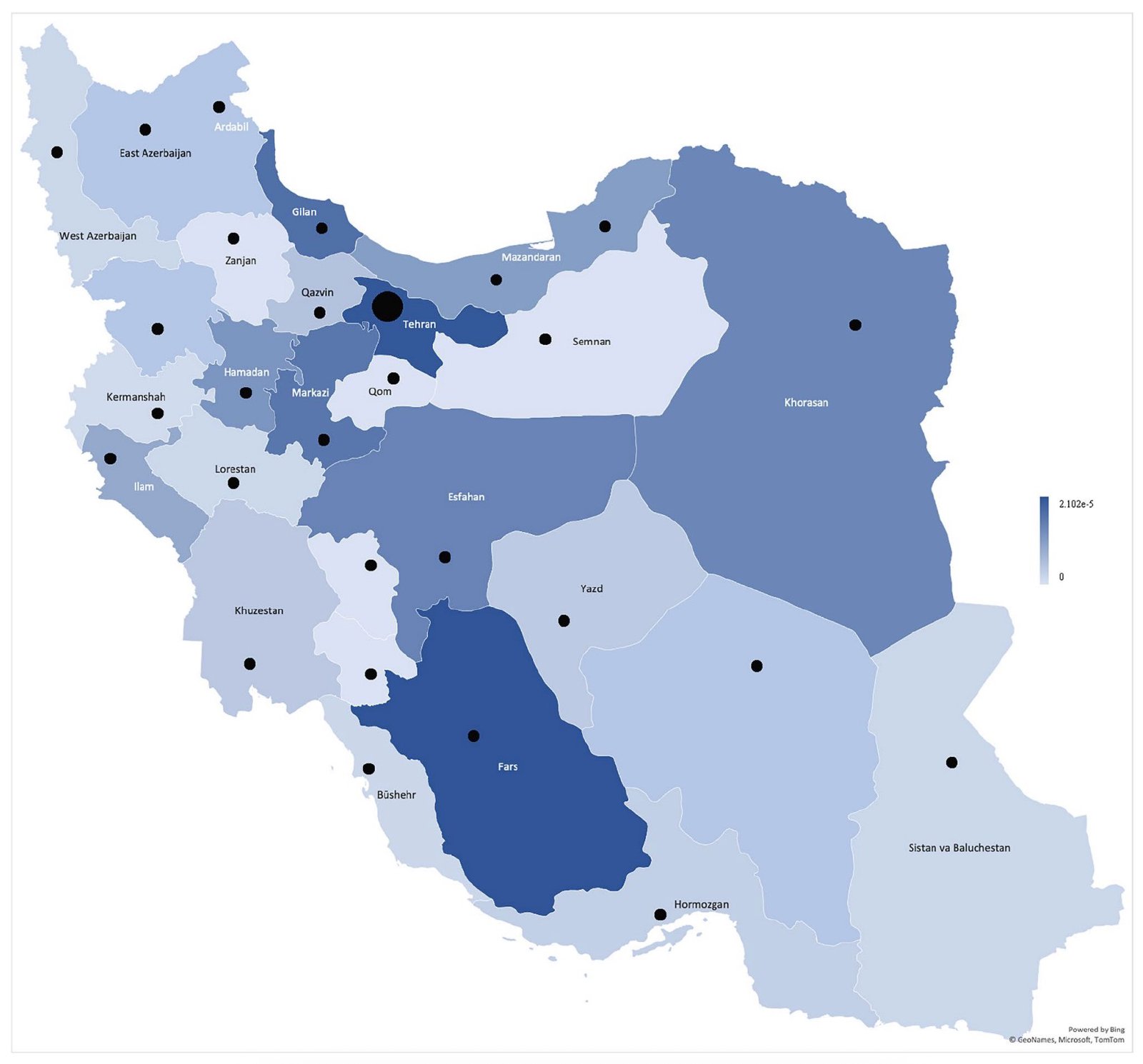
Referrals covered most of the country. Between 2012 and 2017, at least one case of gender dysphoria was recorded in 25 of 31 provinces. Tehran accounted for 32.4% of referrals, followed by Greater Khorasan at 13%, Fars at 12.2%, and Isfahan at 8.6%.
In the 2012–2017 sample, female-to-male transitions accounted for about 67%, and male-to-female transitions for 33%. In other words, female-to-male cases were recorded roughly twice as often. The researchers note that this distribution differs from the pattern described for many Western countries. A similar ratio is visible in an earlier sample from Fars Province: among 44 individuals over the period 2005–2010, 59% were female-to-male and 41% male-to-female transitions.
This ratio is difficult to reconcile with the claim that homosexual men in Iran are being pushed en masse into sex reassignment surgery. If such a practice were truly widespread, the proportion of male-to-female transitions would have to be notably higher. In that case, a significant group of homosexual men who had undergone surgical sex reassignment would be added to the number of people with gender dysphoria assigned male at birth.
Researchers link this distribution to the structure of the patriarchal gender system. The loss of the male role carries a higher social cost than the abandonment of the female one. Male femininity is more heavily stigmatised and is perceived as a particular disgrace. Rejection of the prescribed male position is interpreted as an undermining of status. This amplifies the social risks for trans women and makes their situation more precarious. In addition, trans women are systematically equated with homosexuality and prostitution. These labels intensify the stigma and make male-to-female transition socially more dangerous.
Female-to-male transition, by contrast, appears more comprehensible within the heteronormative paradigm. Trans men are more often described as people striving for family, employment, and stability, rather than as a threat to public morality. Despite the persistent stigma, this image is easier to reconcile with expected social roles.
In recent years, a rise in the number of surgeries has also been reported, linked to medical tourism. A 2022 assessment by the United Kingdom’s Home Office states that approximately 4,000 sex reassignment surgeries are performed in Iran per year; for this reason, the country is often called the second in the world for the volume of such operations, after Thailand. A similar estimate was previously published by The Guardian, which also placed Iran second globally in the number of surgeries.
References and sources
- Saeidzadeh, Z. “Transsexuality in Contemporary Iran: Legal and Social Misrecognition.” Feminist Legal Studies. 2016.
- Talaei, A., et al. “The Epidemiology of Gender Dysphoria in Iran: The First Nationwide Study.” Archives of Sexual Behavior. 2022.
- Alipour, M. “A Case Study of Ayatollah Khomeini’s and Sheikh Tantawi’s Fatwas on Sex-Reassignment Surgery.” Islamic Studies. 2017.
🇮🇷 LGBT History of Iran
 Subscribe to our Telegram channel (in Russian): Urania. With Telegram Premium, you can translate posts in-app. Without it, many posts link to our website, where you can switch languages — most new articles are published in multiple languages from the start.