Saint Moses the Hungarian – One of the First Queer Figures in Russian History?
The life of a monk who rejected marriage, was castrated, and became a saint – and how Rozanov, Slavists, and other scholars interpreted it.
Contents
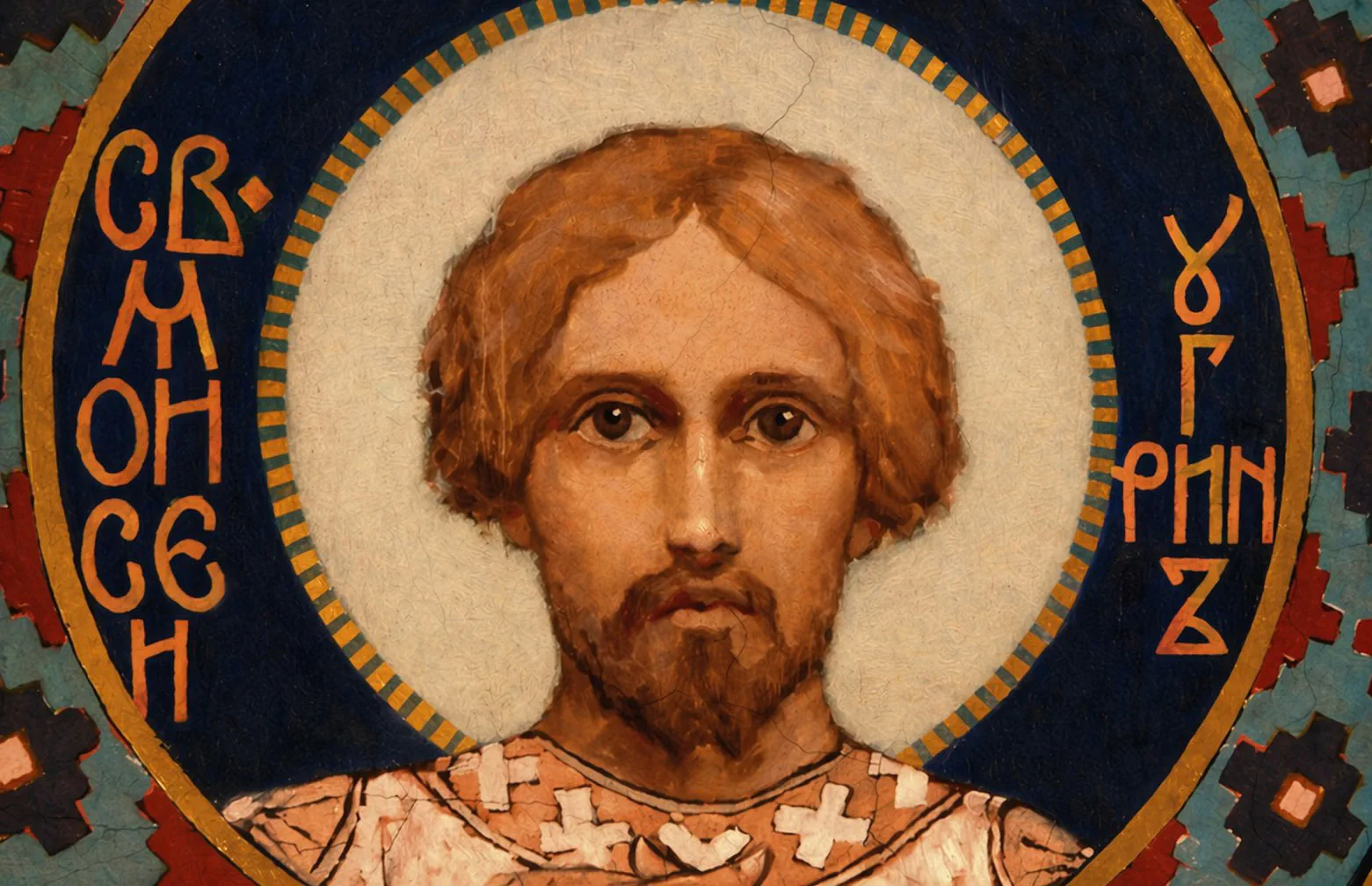
The Life of Saint Moses the Hungarian (Russian: Моисей Угрин, Moisey Ugrin) is one of the most unusual texts in the hagiography of medieval Rus’. A monk of the Kyiv-Pechersk Monastery who was taken captive in Poland, he refused for years to marry a rich and influential woman, was castrated for his refusal, and was later canonized as a model of chastity.
For centuries, this story was read as a tale of the triumph of spirit over flesh. At the beginning of the 20th century, the philosopher Vasily Rozanov saw something else in it: the biography of a man whose nature excluded heterosexual attraction. Later, Western Slavists and gender scholars offered their own interpretations. Each revisited the traditional understanding of the Life in a different way.
How Was Sexuality Understood Then?
The Life cannot be read outside the context of the sexual ethics of medieval Rus’, especially the Kyivan period of the 10th–13th centuries.
The Orthodox Church condemned the extramarital sexual act itself – fornication – rather than focusing on the gender of the participants. As the scholar Eve Levin emphasizes, medieval Rus’ understood sexuality in terms of actions – sin or virtue – rather than identity. The concept of a “homosexual” as a distinct type of person did not exist in Kyivan Rus'.
Of course, this did not mean tolerance in the modern sense. Violations of sexual norms were condemned, but as a rule they did not lead to physical punishment or death. The penalty was repentance and penance, not execution. Compared with England, France, or Spain in the same period, however, the treatment of non-normative sexuality was considerably less severe.
Monastic literary culture developed its own ideal: complete renunciation of carnal passion, be it heterosexual or homosexual. At the intersection of this ascetic ideal and the diversity of human inclinations, the story of Moses the Hungarian unfolds.
Biography of Moses the Hungarian
The main source of information about Moses is a text titled the Kyiv-Pechersk Patericon (Киево-Печерский патерик), compiled in the 1220s based on earlier traditions. Later in the 17th century, the Life was reworked by Bishop Dimitry of Rostov (Russian: Димитрий Ростовский). Both versions describe in detail the physicality, sexual coercion, and physical violence.
Moses came from Hungary (hence the nickname “the Hungarian” — Ugrin, from the Old Russian word for Hungarians). Historians argue about his roots: István Ferincz believes that his family fled the imposition of Latin Christianity, Mikhail Yurasov calls them Subcarpathian Rusyns, and Endre Iglói traces them to descendants of Hungarian warriors. Whatever the case, Moses and his two brothers, Ephraim and George (Russian: Ефрем, Георгий), served at the court of the Kyivan prince Boris.
In 1015, during a civil war, mercenaries of Prince Sviatopolk the Accursed (Russian: Святополк Окаянный) killed Boris on the Alta River. George died trying to shield the prince with his body. Moses was the only survivor of the retinue. He took refuge in Kyiv with Predslava, the sister of Prince Yaroslav the Wise.
But in 1018, the Polish king Bolesław I the Brave captured the city and led away many captives. Chronicles report that Bolesław raped Predslava and made her his concubine — in revenge for her earlier refusal to marry him. Moses also fell into captivity, turning from a courtier into a chained slave.
Captivity in Poland
It is the Polish period that became the center of the Life. The physically strong and handsome Moses attracted the attention of a noble Polish widow (her husband had died in the Kyiv campaign).
In medieval Eastern Europe, widows often gained a unique status: they could independently manage property, unlike married women. This aristocrat owned vast lands and was not dependent on male guardians. The Polish scholar Agnieszka Nogal even calls her “the first Polish feminist.”
The widow ransomed Moses for a huge sum and began to persistently pursue him. For medieval literature, this is a rare plot: a woman openly uses power and money to coerce a male slave into a relationship. She promised him freedom, wealth, and the status of a lawful husband, dressed him in expensive clothes, and tried to act with affection.
Moses responded with a categorical refusal. He invoked the fear of God, tore off his rich clothes, and preferred to starve. Other captives urged him to yield: the widow was beautiful, and marriage was not forbidden by the church. But Moses answered:
“Let all the righteous be saved with their wives, I alone am a sinner and cannot be saved with a wife.”
— Kyiv-Pechersk Patericon. Life of Moses the Hungarian
When persuasion failed, the widow turned to violence. Moses was beaten and starved in the dungeon. Finally, she complained to King Bolesław. The king, who himself had repeatedly resorted to sexual violence, did not understand Moses. To reject wealth for the sake of bodily purity seemed to him madness. Bolesław allowed the widow to do whatever she wanted with the captive, so that other slaves would not follow his example.
At around the same time, Moses was secretly tonsured by a passing Athonite priest. Now his refusal of marriage gained official spiritual justification.
Castration and Return to Kyiv
Realizing that Moses was finally lost to her, the widow flew into a rage. The Life describes the reprisal with frightening naturalism:
“The widow ordered him to be given a hundred blows every day, and then ordered his secret parts to be cut off [castrated], saying: ‘No, I must not spare his manhood! Let others not enjoy his beauty either.’ And Moses lay as if dead, bleeding, barely breathing.”
— Kyiv-Pechersk Patericon. Life of Moses the Hungarian
Paradoxically, this mutilation resolved the conflict. According to Byzantine canons, voluntary self-castration was strictly punished, but people forcibly castrated were considered martyrs. Deprived of his reproductive organs, Moses approached the ideal of monastic dispassion.
King Bolesław the Brave died in 1025, and later a rebellion broke out in Poland. During the unrest, the widow was killed — the Life notes that Moses’ prophecy was thus fulfilled.
Having gained his freedom, Moses reached Kyiv with great difficulty. Because of his wounds, he could walk only by leaning on a staff. He lived in the Kyiv-Pechersk Monastery for about ten years.
In the monastery, Moses acquired a special status: he was believed to have received power over the sexual temptations of other monks. The Patericon relates how one of the brethren asked him for help in the struggle against carnal passion. Moses struck him with his staff — “and immediately his members went numb, and from then on there was no temptation for this brother.”
Moses died around 1043. His relics began to be venerated as miraculous. For example, another famous monk, John the Long-Suffering (Russian: Иоанн Многострадальный), struggled with sexual obsessions for thirty years (he even buried himself alive in the ground), but received deliverance only after praying at Moses’ relics. Thus the monastic community gained an ideal intercessor.
The veneration of Moses began almost immediately after his death and was officially established in the 17th century. For believers, he became the main helper in the struggle against impure thoughts.
Vasily Rozanov: The Theory of the “Third Sex”
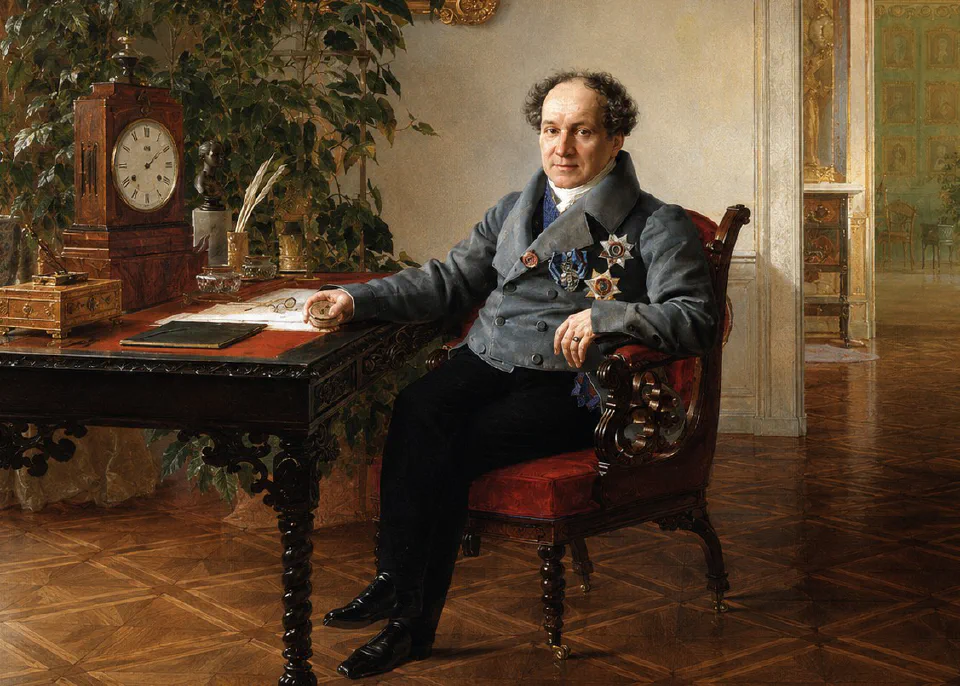
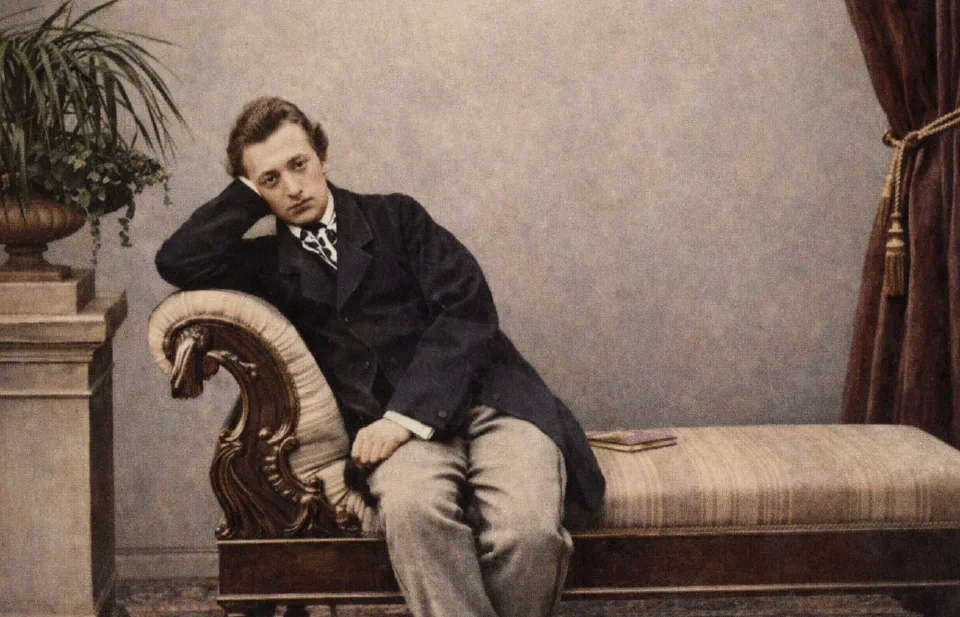
Until the 20th century, the life of Moses was read in an orthodox manner: as an example of the victory of the Christian will over carnal temptation. A radical revision was proposed by the philosopher Vasily Rozanov.
In 1911, he published People of the Moonlight (Люди лунного света) — an unusually frank treatise for its time (especially for Russia) on same-sex love, the “third sex,” and their connection with Christianity. Rozanov defended the traditional family and procreation, but at the same time criticized monastic celibacy and considered same-sex love natural for a certain category of people.
Relying on the ideas of European sexologists from the beginning of the century, Rozanov used the concept of the “third sex.” He called such individuals “people of the moonlight” and believed that homosexuality throughout history was often hidden behind religious celibacy.
Initial Diagnosis
At first, Rozanov applied this theory to Moses the Hungarian. The philosopher did not see his act as a religious feat. According to Rozanov, Moses did not struggle with attraction to a woman — the attraction simply did not exist.
Rozanov asked: why did a healthy young man prefer torture and castration to wealth and freedom? And he answered himself: because contact with a woman was physiologically unbearable for him.
“An invincible disgust — is the same as the actus sodomiticus [homosexual act] for us normal people… For to them, our sexual intercourse is exactly ‘sodom,’ ‘abomination,’ ‘impossible.’”
— Vasily Rozanov. People of the Moonlight
For Rozanov, the story of Moses became the key to understanding all of monasticism. He wrote that this story “should be engraved on copper and nailed to the gates of all monasteries.” The philosopher considered monastic celibacy not a victory of the will, but a social refuge for those who by their nature could not enter into a traditional marriage.
Abandonment of the Initial Diagnosis
Interestingly, in the same book Rozanov published a letter from an anonymous critic and unexpectedly agreed with him (after all, this is typical of Rozanov, who could hold several opposing views on one issue).
The anonymous author wrote that Moses’ resistance is a normal male reaction to aggression. A man does not tolerate a woman taking the initiative by force. The more she presses, the stronger the resistance. The issue is not physiological inability, but wounded pride. The anonymous author gave a clear example: if Rozanov himself had been grabbed on the street by a woman demanding intimacy and beating him with an umbrella, he too would have preferred to run to the police station rather than to her bedroom.
Rozanov replied that he deeply agreed with this logic and was glad to relieve Moses of “suspicions of abnormality.” The philosopher shifted all the blame onto the author of the Life: allegedly, the author turned natural male resistance into a “Uranian [homosexual] profession of hostility toward femininity in general.”
Simon Karlinsky: Rebellion Against the Gender Role
The American scholar Simon Karlinsky viewed the story of Moses in the context of a hidden homoerotic tradition in Russian culture. He noted that the text of the Life is permeated with a hostility toward women and sexuality typical of monks.
Karlinsky considered Rozanov’s method speculative, but appreciated the very raising of the question. For him, Moses is an example of a severe conflict between a person and his imposed social role.
As a disenfranchised slave, Moses reclaims his free will through a complete refusal to participate in marriage and procreation. According to Karlinsky, the castration was the mistress’s revenge for the fact that Moses preferred male company and rejected traditional marriage.
Eve Levin: The Ascetic Ideal
The scholar Eve Levin offers a more cautious approach, warning against overly modern interpretations. Within medieval religious thought, it is not a person’s psychological “nature” that is important, but his actions. For Orthodox theology, Moses’ refusal is primarily a manifestation of spiritual will and grace.
However, Levin acknowledges the important social function of monasteries. They served as a legal refuge for people who for various reasons could not or did not want to marry. The fate of Moses perfectly demonstrates how this social niche worked.
Nick Mayhew: Constructing a New Masculinity
The contemporary scholar Nick Mayhew, in his article Eunuchs and Ascetic Masculinity in Kievan Rus, analyzes the Life from the perspective of gender history.
Mayhew draws attention to an important detail in the text: Moses emphasizes several times that he is physiologically capable of having a relationship with the widow, but refuses out of religious convictions. For the author of the Life, this is crucial. If a person does not sin simply because he cannot, it is not considered a virtue. Refusal must be a conscious choice. This directly contradicts Rozanov’s theory of innate inability.
According to Mayhew, a new Christian form of masculinity is constructed in the story of Moses. It is determined not by power and the continuation of the family line, but by the complete absence of sexual desire. Castration here acts as a paradoxical act of liberation. It transfers Moses to the status of a eunuch, removes the conflict between spirit and flesh, and makes him an ideal of ascetic masculinity.
Returning to the monastery, Moses gains the ability to transmit this state to others. When he strikes a monk suffering from carnal desires with his staff, the monk forever loses his sensitivity. Mayhew sees this as a ritual transmission of “castrated masculinity.” The secular model of fatherhood is replaced by a spiritual one: Moses becomes a “father” for the monks precisely through his refusal of physical procreation.
Can Moses Be Considered a Queer Figure?
This question demands strict historical precision. From the perspective of historical sexuality studies, the answer will be negative. The concepts of “homosexual” or “queer” did not emerge until the late 19th century. In Kyivan Rus’, there were no sexual identities in our understanding — there were only actions. Calling an 11th-century monk by modern terms is incorrect.
But if we look more broadly, the story of Moses certainly allows for a queer reading.
First, he radically falls out of the heteronormative system, where a person is expected to marry and have children. For medieval society, the refusal to continue the family line and pass on property was a violation of the social norm.
Second, his fate breaks the division into male and female. Having become a eunuch, Moses steps outside the usual gender roles. As Mayhew notes, he does not become sexless, but acquires an alternative masculinity.
Third, the Life shows the possibility of a different family in ancient Russia. Having renounced blood relations, Moses finds a new family in the male collective of the Kyiv-Pechersk Monastery, where spiritual bonds are valued higher than blood ties.
It is impossible to reliably know what Moses’ actual psychosexual profile was. However, his story itself proves: even in the foundation of ancient Russian culture, there was a space for non-normativity. The right to difference, the search for one’s identity and alternative forms of intimacy have always found their place in the history of Russia and Russian Orthodoxy.
Full Text of the Life of Moses the Hungarian (from the Kyiv-Pechersk Patericon)
This is what is known of blessed Moses the Hungarian, whom Saint Boris loved. He was Hungarian by birth and the brother of George, to whom Saint Boris gave a golden grivna (neck ring). George was killed with Saint Boris on the Alta, and his head was cut off for the golden grivna. Moses alone escaped the slaughter and its bitter death. He went to Predslava, Yaroslav’s sister, and remained with her. Because it was then impossible to go anywhere, he stayed there, steadfast in spirit and praying to God, until our pious prince Yaroslav, moved by ardent love for his murdered brothers, marched against their killer and defeated the godless, cruel, and accursed Sviatopolk. Sviatopolk fled to Poland, returned with Bolesław, drove Yaroslav out, and took the throne in Kyiv. When Bolesław returned to Poland, he took with him both of Yaroslav’s sisters and many of his boyars (high-ranking nobles), along with blessed Moses. They led Moses away with his hands and feet bound in heavy irons and kept him under close guard, for he was strong in body and handsome in face.
A noblewoman saw him. She was beautiful and young and possessed great wealth and power. Struck by the young man’s beauty, her heart was wounded with desire, and she sought to inspire the same desire in the venerable man. She began to coax him with flattering words: “Young man, why do you endure such torments in vain when you have the sense to free yourself from this torment and suffering?” Moses answered, “God wills it so.” She told him, “If you submit to me, I will free you and make you great throughout the Polish land, and you will possess me and all my estates.”
The blessed man understood her impure desire and said: “What man has ever been saved by taking a woman and submitting to her? Adam, the first-created man, submitted to a woman and was expelled from paradise. Samson surpassed everyone in strength and defeated all his enemies, yet a woman betrayed him to foreigners. Solomon fathomed the depths of wisdom, yet obeyed a woman and bowed to idols. Herod won many victories, but, enslaved to a woman, beheaded John the Baptist. How can I, who am free, become a woman’s slave if I have never been intimate with women from the day of my birth?” She replied: “I will ransom you, make you a nobleman, and place you as lord over my entire household. You will be my husband; only do my will, quench my soul’s desire, and let me enjoy your beauty. Your consent is all I need. I cannot bear to see your beauty wasted, and then the flame burning in my heart will subside. My thoughts will cease to torment me, my passion will be calmed, and you will enjoy my beauty and become master of all my wealth, heir to my power, and chief among the boyars (high-ranking nobles).” Blessed Moses told her: “Know this firmly: I will not do your will. I want neither your power nor your wealth, for purity of soul and, still more, of body is better than all these things. The five years the Lord has granted me to endure in these chains will not have been in vain. I did not deserve such torments, and therefore I hope that through them I shall be spared eternal torment.”
When the woman saw that she was being denied such beauty, a devilish thought occurred to her: “If I ransom him, he will have no choice but to submit to me.” She sent word to the young man’s owner that he could name his price if only he would sell Moses to her. Seeing an opportunity to enrich himself, the owner took about a thousand silver grivnas from her and handed Moses over. Without the least shame, they tried to force him into an ungodly act. Having gained power over him, the woman ordered him to marry her. She freed him from his chains, dressed him in costly clothes, fed him rich foods, and tried through embraces and amorous enticements to force him to satisfy her passion.
Seeing the woman’s frenzy, the venerable man prayed still more diligently and wore himself out with fasting. For God’s sake, he preferred to eat dry bread and drink water in purity rather than consume rich food and wine in defilement. Like Joseph, he removed not merely one tunic but cast off all his clothes to avoid sin, holding the life of this world as nothing. He drove the woman into such a rage that she sought to starve him to death.
But God does not abandon the servants who trust in Him. He moved one of the woman’s servants to compassion, and the man secretly brought Moses food. Others urged the venerable man: “Brother Moses, what prevents you from marrying? You are still young, and this widow, who lived with her husband for only one year, is more beautiful than many other women. Her wealth is countless and her power in Poland is great; if she wished to marry a prince, even he would not disdain her. Yet you, this woman’s captive and slave, do not wish to become her master! If you say, ‘I cannot transgress Christ’s commandment,’ does Christ not say in the Gospel, ‘A man shall leave his father and mother and be joined to his wife, and the two shall become one flesh, so that they are no longer two but one flesh’? And the Apostle says, ‘It is better to marry than to burn.’ He commands widows to marry again. Why, when you are not a monk but a free man, do you submit yourself to cruel and bitter torments? Why do you suffer? What praise will you receive if you die in this calamity? From the first people until now, who but monks has shunned women? Did Abraham, Isaac, or Jacob? Joseph first resisted a woman’s love and later took a wife himself. Even if you survive now, you will still marry later – and who will not then laugh at your folly? It is better for you to submit to this woman, become free, and be master of everything.”
He answered them: “Indeed, my brothers and good friends, fine counsel you give me! I understand that your words are better than those the serpent whispered to Eve in paradise. You urge me to submit to this woman, but I shall never accept your counsel. Even if I must die in these chains and terrible torments, I know that I shall receive God’s mercy for it. Let all the righteous be saved with their wives; I alone am a sinner and cannot be saved with a wife. Had Joseph submitted to Potiphar’s wife, he would not later have reigned. God saw his steadfastness and granted him a kingdom; his fame has passed through the generations because he remained chaste, though he later had children. I seek neither the kingdom of Egypt nor power. I do not wish to be great among the Poles or honored throughout the land of Rus’ – I have renounced all this for the sake of the heavenly Kingdom. If I escape this woman’s hand alive, I shall become a monk. What does Christ say in the Gospel? ‘Whoever leaves father, mother, wife, children, and home is My disciple.’ Should I obey Christ or you? The Apostle says, ‘A married man is concerned with how to please his wife, while an unmarried man thinks of how to please God.’ I ask you: whom should one serve more, Christ or a wife? For it is written, ‘Slaves must obey their masters in what is good, not in what is evil.’ Let those of you who care for me know that no woman’s beauty will ever beguile me or separate me from the love of Christ.”
When the widow heard of this, she harbored a wicked thought. She ordered horses to be provided for Moses and had numerous servants take him around the towns and villages that belonged to her. She told him, “Everything here that pleases you is yours; do with it as you wish.” She told the people, “This is your master and my husband; bow to him when you meet him.” She had many male and female slaves in her service. The blessed man laughed at the woman’s folly and told her: “You labor in vain. You cannot beguile me with the perishable things of this world or take away my spiritual wealth. Understand this, and do not labor in vain.”
She told him: “Do you not know that you were sold to me? Who will deliver you from my hands? I will never let you go alive; after many torments, I shall put you to death.” He answered without fear: “I am not afraid of what you say; the one who delivered me into your hands bears the greater sin. From now on, God willing, I shall become a monk.”
In those days, a monk of priestly rank came from the Holy Mountain. Guided by God, he went to the blessed man and clothed him in the monastic habit. He instructed Moses at length about purity and about escaping that impure woman without surrendering himself to the enemy’s power, and then departed. They searched for him but could find him nowhere.
Having lost all hope, the woman subjected Moses to cruel torture. She had him stretched out and beaten with rods until the ground was soaked with blood. As they beat him, the men said: “Submit to your mistress and do her will. If you do not obey, we shall crush your body to pieces. Do not imagine that you will escape these torments; no, amid many bitter torments you shall give up your soul. Have mercy on yourself: cast off these tattered rags and put on costly clothes. Save yourself from the torments awaiting you before we begin to tear your body apart.” Moses answered: “Brothers, carry out what you have been commanded; do it without delay. But I can never renounce the monastic life and the love of God. No torture, fire, sword, or wound can separate me from God and the great angelic habit. This shameless and mad woman has revealed her immodesty. Not only does she have no fear of God, but, scorning human decency, she shamelessly forces me toward defilement and adultery. I shall not submit to her or do the accursed woman’s will!”
After long considering how to avenge her humiliation, the woman sent this message to Prince Bolesław: “You know that my husband was killed while campaigning with you and that you gave me leave to marry whomever I wished. I fell in love with a handsome young man among your captives, paid much gold to ransom him, and brought him into my house. I gave him everything I had – gold, silver, and all my authority – but he accounted it all as nothing. Many times I tormented him with beatings and hunger, yet even that was not enough for him. He spent five years in chains under the man who captured him, and this is now his sixth year with me. He has suffered many torments at my hands for his disobedience, which he brought upon himself through his own hard-heartedness; now some black-robed monk has tonsured him. Whatever you command me to do with him, I shall do.”
The prince ordered her to come to him and bring Moses. She came before Bolesław with Moses. On seeing the venerable man, Bolesław tried at length to compel him to take the widow as his wife, but could not persuade him. He said: “How can you be so unfeeling? See how many blessings and honors you deny yourself and what bitter torments you embrace! From now on, know that life or death awaits you: if you do your mistress’s will, we shall honor you and grant you great power; if you disobey, you shall die after many torments.” He told the woman: “Let none of the captives you have bought be free. Deal with them as you wish, as a mistress deals with her slaves, so that others will not dare disobey their masters.”
Moses answered: “And what does the Lord say? ‘What does it profit a man if he gains the whole world but forfeits his soul? Or what shall a man give in return for his soul?’ Why do you promise me glory and honor that you yourself will soon lose, when the grave receives you with nothing? And this impure woman will be violently killed.” It later happened just as the venerable man had foretold.
Having gained even greater power over him, the woman shamelessly tried to draw him into sin. One day she had him placed by force in her bed and kissed and embraced him, but even this temptation failed to attract him. The blessed man told her: “Your efforts are in vain. Do not think me mad or incapable of the act: it is for fear of God that I abhor you as impure.” On hearing this, the widow ordered that he receive a hundred blows each day and then had his private parts cut off, saying: “I will not spare his beauty so that others may enjoy it.” Moses lay as if dead, bleeding and barely breathing.
Indulging the woman out of his former love for her, Bolesław unleashed a great persecution of the monks and expelled them all from his land. But God soon avenged His servants. One night, Bolesław died suddenly, and a great rebellion arose throughout the Polish land. As the Chronicle relates, the people rose up and killed their bishops and boyars (high-ranking nobles). The widow was killed as well.
After recovering from his wounds, Venerable Moses came to the holy Pechersk Monastery of the Mother of God, bearing the wounds of martyrdom and the confessor’s crown like a victor and warrior of Christ. The Lord granted him power over the passions.
One of the brethren, possessed by carnal passion, came to the venerable man and begged for help: “I vow to observe until death everything you command me.” The blessed man told him, “Never in your entire life speak a word to any woman.” The brother lovingly promised to obey. The saint held a staff, without which his wounds left him unable to walk. He struck the visitor in the groin with it; the brother’s members immediately went numb, and from then on he felt no temptation.
What happened to Moses is also recorded in the Life of our holy father Anthony, for the blessed man arrived in Saint Anthony’s time. He died in the Lord after his good confession, having spent ten years in the monastery. In captivity, he had suffered five years in chains and a sixth year for the sake of purity.
I have also mentioned the expulsion of the monks from Poland because of the tonsure of the venerable man, who had devoted himself to the God he loved. This is related in the Life of our holy father Theodosius. When Prince Izyaslav expelled our holy father Anthony because of Varlaam and Ephraim, the prince’s Polish wife tried to stop him, saying: “Do not even think of doing this. The same thing once happened in our land: for some offense, the black-robed monks were expelled from our borders, and great evil then befell Poland!” This happened because of Moses, as has already been told. And so we have written all that we learned about Moses the Hungarian and John the Recluse and about what the Lord did through them for His glory, glorifying them for their patience and endowing them with gifts of miracle-working. Glory to Him now and ever and unto ages of ages. Amen.
Text of the Life translated from: Kyiv-Pechersk Patericon // Library of Literature of Ancient Rus’. Vol. 4: 12th century. Ed. D. S. Likhachev et al. 1997.
Literature and Sources
- Artamonov Yu. A. Moses the Hungarian, Venerable of Kyiv-Pechersk // Orthodox Encyclopedia. Vol. 46. 2017.
- Gallus Anonymus. Chronicle and Deeds of the Princes or Rulers of the Poles.
- Dimitry of Rostov. Lives of the Saints in Russian, Based on the Chet’i-Minei. 12 books. Moscow: Kovcheg. 2010 (based on the 1905 edition).
- Kyiv-Pechersk Patericon // Library of Literature of Ancient Rus’. Vol. 4: 12th century. Ed. D. S. Likhachev et al. 1997.
- Lepakhin V. V. Venerable Moses the Hungarian – the “Second” or “Other” Joseph // Proceedings of the Department of Old Russian Literature (TODRL). Vol. 54. 2003.
- Rozanov V. V. People of the Moonlight. 1911.
- Thietmar of Merseburg. Chronicle.
- Fartusov V. D. Guide to the Painting of Icons of God’s Holy Saints. 1910.
- Yurasov M. K. Notes on the Ages of Three Hungarian Brothers – Ephraim, Moses, and George… // Studia Slavica Hung. Vol. 46. 2001.
- Karlinsky S. Russia’s Gay Literature and History. Gay Sunshine. 1976.
- Levin E. Sex and Society in the World of the Orthodox Slavs, 900–1700. Cornell University Press. 1989.
- Mayhew N. Eunuchs and Ascetic Masculinity in Kievan Rus. The Medieval History Journal, 21(1). 2018.
- Nogal A. 1000 lat polskiego feminizmu. Historia Mojżesza Węgrzyna i zakochanej w nim kobiety // Historia.org.pl, 2018.