The Story of Syrian General Suheil al-Hasan, Nicknamed 'The Tiger'
And his young lovers.
Contents
Origins and Early Service
Suheil al-Hasan was born in 1970 in Syria’s Latakia province.
Al-Hasan is an Alawite. The Alawites are a religious community associated with the Shiite branch of Islam. Their doctrine includes elements of Islam, Christianity, and certain ancient Near Eastern traditions. In Latakia, Alawites make up a significant share of the population, and in Syria, members of this community have traditionally held prominent positions in the army and state institutions.
Unlike orthodox Islam, which strictly condemns homosexuality, the Alawite attitude toward this issue is less categorical. Their religious practices and worldview are often perceived as more liberal and tolerant. In the Alawite tradition, greater emphasis is placed on inner spirituality and symbolism than on strict observance of external norms.
In 1991, al-Hasan graduated from the Syrian Arab Air Force Academy. After graduation, he served in various Air Force units and in the air defense command.
He was later transferred to the Air Force intelligence service. According to available reports, he established himself there as a careful analyst. He worked on identifying and neutralizing terrorist networks.
In the 2000s, he infiltrated Al-Qaeda structures operating in Syria, which led to the arrests of a number of members of the organization. As a result, he acquired a reputation as one of the most reliable and decisive officers in Syria’s security services.
Personal Life, Reputation, and Image Within the Regime
Suheil al-Hasan is married. Rumor has it he has a son whom he has not seen since the start of Syria’s civil war.
Colleagues and subordinates describe him as an extremely serious person, almost never inclined to joke, and entirely focused on service. He is also characterized as someone who maintains unconditional loyalty to the ruling regime.
Al-Hasan is known for his interest in poetry. He would recite his own poems over loudspeakers, addressing opponents and warning them about the consequences of refusing to surrender. He himself claims that he gives enemies a chance to surrender but acts without mercy if, in his assessment, they continue to resist or violate agreements.
Thanks to his military effectiveness, al-Hasan gained high standing among supporters of the Syrian government. His successes and tactical reputation made him a visible symbol of loyalist forces. Elements of a personality cult emerged in the country: his image appeared on cars and billboards.
Before the fall of the Assad regime, he was considered one of the most influential generals in the Syrian army, second perhaps only to Maher al-Assad, the brother of President Bashar al-Assad.
Relationships With Men
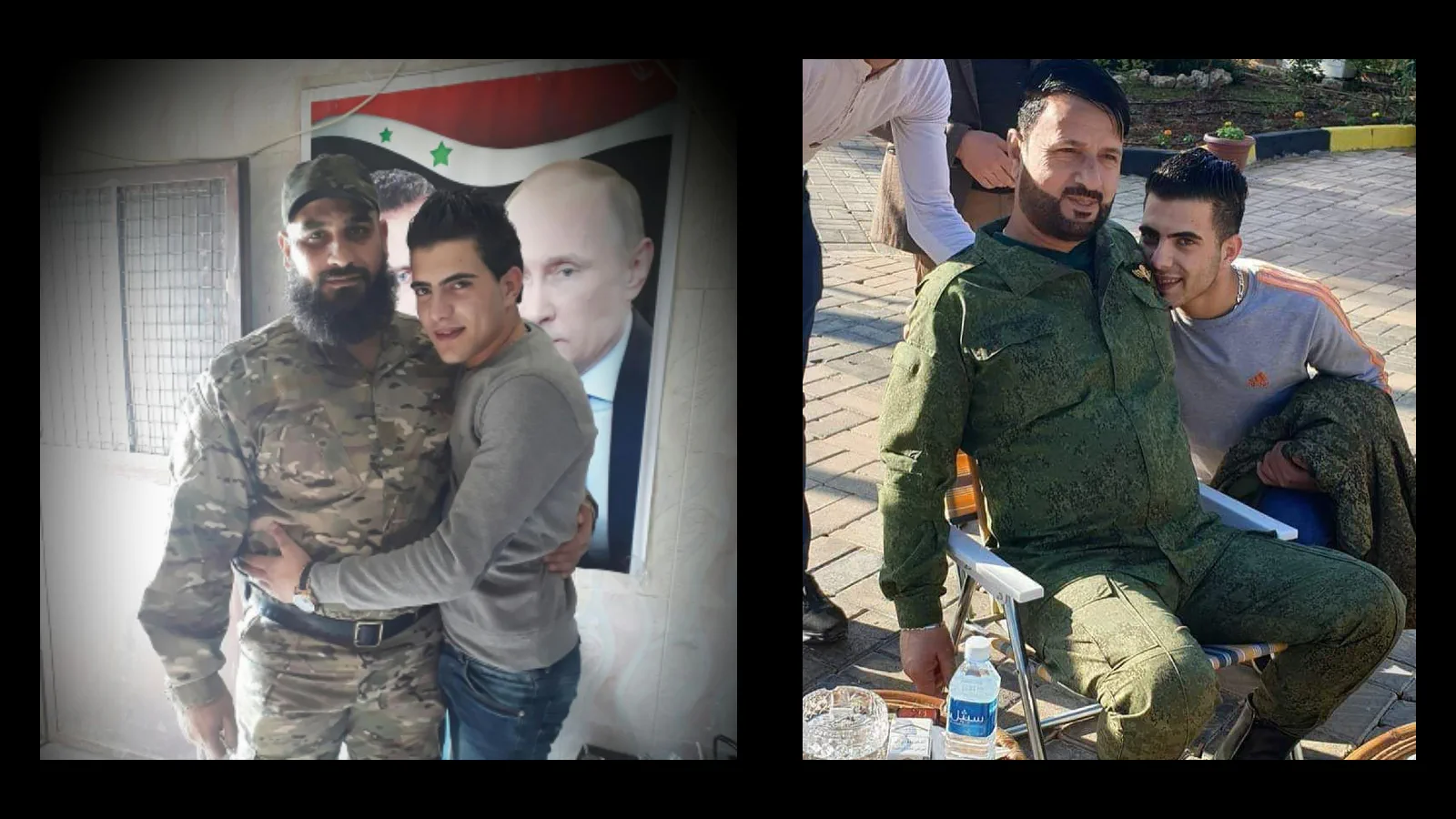
Suheil al-Hasan is known for close relationships with his closest companions and, allegedly, boyfriends, whom he often takes with him on trips. In a number of photos, taken both at the front and outside combat settings, he can be seen embracing or kissing these men.
One of al-Hasan’s alleged lovers was Ahmed Khalaf. He accompanied the general for many years and was killed in 2019 at the front in Idlib province, after stepping on a mine.
It is impossible to draw a definitive conclusion about Suheil al-Hasan’s sexual orientation. In the Arab cultural context, embraces and kisses between men are often perceived as expressions of friendship, brotherhood, and loyalty, rather than as romantic gestures.
There is no definitive answer to whether such displays of closeness are connected to his sexual orientation. No reliable confirmation has been presented in either direction, and the question remains open.
Military Career and Role in the Civil War
With the start of Syria’s civil war, al-Hasan took a prominent place in military operations. In 2011, while holding the rank of colonel, he led operations against Al-Qaeda militants on the outskirts of Latakia. By 2013, his successes against opposition groups drew the attention of the central command. According to reports, this became the basis for recommendations to transfer him to more important fronts.
During the war, al-Hasan participated in a number of major operations. According to numerous accounts, harsh methods of warfare were used in these clashes, including scorched-earth tactics. After devastating strikes, troops moved to clearing operations, advancing from house to house. Such a strategy could suppress remaining resistance but was accompanied by significant civilian casualties.
In 2013, al-Hasan formed an elite unit known as the Tiger Forces. This formation became known for large-scale offensive operations, including the sieges of Aleppo and Eastern Ghouta. These campaigns were accompanied by severe destruction of infrastructure and the deaths of thousands of civilians.
In addition, al-Hasan is accused of using chemical weapons during these operations. His actions prompted condemnation from the international community and led to sanctions, including over mass human rights violations.
Despite this, he retained the trust of Syria’s leadership. His methods of suppressing uprisings were described as brutal but effective. This allowed him to maintain his status as one of the most influential commanders, and the Tiger Forces became an important instrument of the regime in the fight for control over strategically significant regions of the country.
The Tiger Forces, Russia, and Sanctions
Al-Hasan’s unit received substantial support from Russia. Soldiers in this formation were primarily equipped with Russian weapons and hardware. Russian military advisers participated in training the units. This underscored al-Hasan’s close engagement with Moscow.
According to expert assessments, al-Hasan viewed Russia as the Syrian government’s key ally. This distinguished him from some military and political figures oriented toward Iran.
The French newspaper Le Monde called al-Hasan a potential rival to Bashar al-Assad in the struggle for leadership in Syria. His popularity among the military and the personality cult that had formed around him – reinforced by battlefield successes – were cited as the basis for such speculation.
Al-Hasan is under United States sanctions, which accuse him of involvement in war crimes and human rights violations. These measures restrict his financial activity and contacts with international bodies, but, as observers note, they have not weakened his position inside Syria.
2024 Appointment and Status After the Fall of the Regime
On April 9, 2024, Major General Suheil al-Hasan was appointed commander of the Special Forces of the Syrian Arab Army.
When new fighting began in late November 2024, the Syrian regime deployed significant forces against the Islamists, including special units under al-Hasan’s command. They were sent to strategically important areas in and around Hama to contain the Islamist advance from Aleppo.
According to rebel officials, on December 2, 2024, at least one drone strike hit a group of military officials in the northern part of Hama, near the front line. A rebel spokesman who identified himself as Ali al-Rifa’i stated that one of the targets was General Suheil al-Hasan. It is known that he survived.
After the fall of the Assad regime in December 2024, al-Hasan reportedly fled to Moscow. In 2025, the European Union imposed sanctions against him.