The Execution of the Siamese Gay Prince Rakronnaret (Kraison): Power and a Charge of Treason
The earliest known episode in Thailand's LGBT history.
Contents
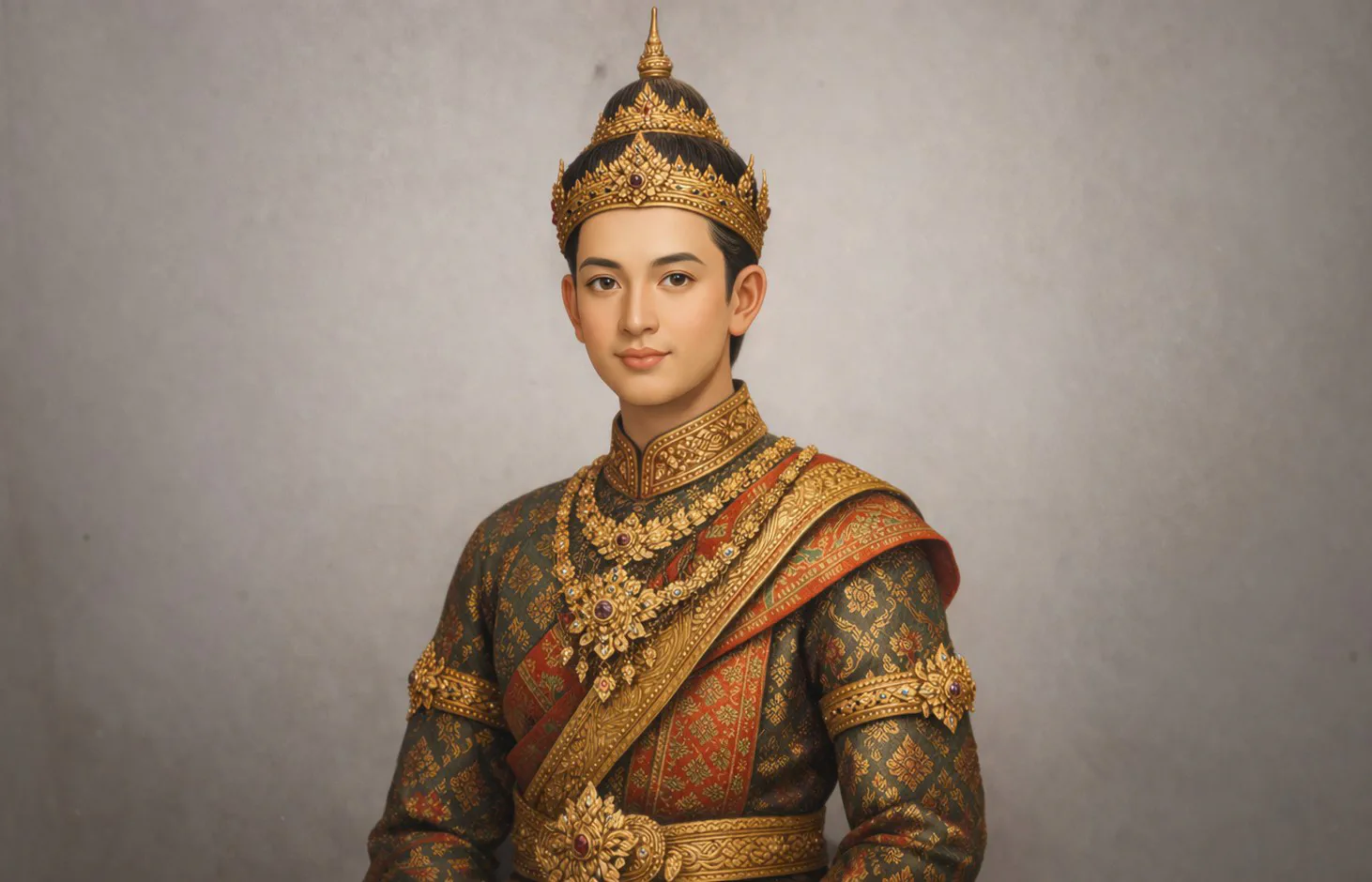
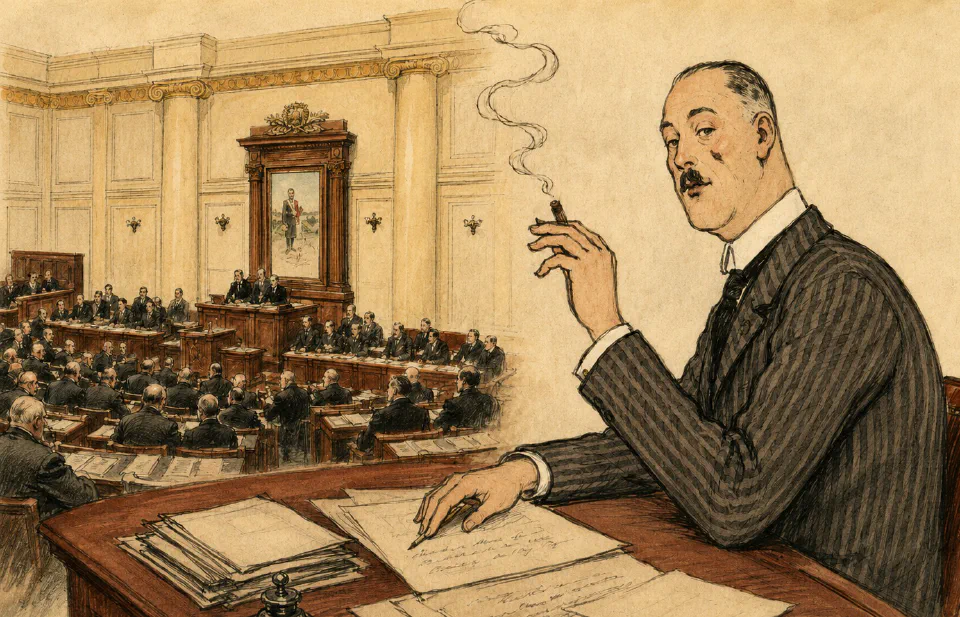
In 1848, King Rama III of Siam sentenced his friend, Prince Rakronnaret – also known as Kraison – to death. The prince, who was openly in relationships with men, was charged with treason. His execution followed the traditional method reserved for high-ranking individuals: he was placed in a velvet sack and beaten to death with clubs.
In court influence, the prince was second only to the king. His reputation was tarnished by allegations of corruption and by his numerous relationships with members of a male theatre troupe that he owned. Rakronnaret did not conceal these relationships.
The central question in this case is what exactly he was executed for. It remains unclear whether there was a connection between his sexual life and the charge of political treason – and whether the execution was for both circumstances together, or solely for the suspicion of treason.
Origins and Early Years
Prince Rakronnaret was born on 26 December 1791. He was the 33rd child of King Rama I, born to a royal consort (concubine) named Kaeo Noi. From an early age, he showed an interest in Buddhism, developed a fascination with divination, and became a close friend of the Crown Prince – the future King Rama III.
As an adult, Rakronnaret held several key posts at the court of Rama III. He headed ministries responsible for the Buddhist monastic order and the palace, as well as an office overseeing the kingdom’s southern regions. He also served as a judge with the highest authority in cases that fell under these institutions.
This position strengthened his influence, increased his wealth, and expanded his network of connections. By the 1840s, his power had become so prominent that some courtiers grew suspicious.
The situation reached a breaking point when rumours spread of a possible conspiracy with secret societies and preparations for a coup against the king. After this, the attitude of Rama III – his longstanding friend and patron – noticeably cooled.
How the Investigation Began
The investigation was triggered by a conflict between two men who depended on Rakronnaret. One of them accused the other’s son of theft. The charge was false, but the accuser hoped that a prison sentence would strip the young man of the right to inherit his father’s position. The vacancy left by the elderly man could then be taken by the accuser himself.
Using his wealth, the accuser bribed judges and members of the theatre troupe closely associated with the prince and under his patronage. This secured the desired ruling. An appeal addressed directly to Rakronnaret achieved nothing: the prince upheld the verdict.
The father then submitted a complaint to King Rama III. Outraged by what he learned, the king ordered an investigation. The inquiry quickly established that Rakronnaret had indeed confirmed an unjust decision. Rama III regarded this as a betrayal, ordered the investigation to be expanded, and directed that the prince’s other activities be examined as well.
The findings proved unexpected for the court. It emerged that the prince not only accepted bribes in exchange for judicial outcomes himself, but also allowed members of his theatre troupe to take money from both sides in a case. Decisions were issued in favour of whoever paid more.
The Prince’s Theatre Troupe and Its Role
The theatre troupe occupied a special place in Prince Rakronnaret’s life. The actors participated in reenactments of monarchical rituals. Together with the troupe, the prince imitated the king and his consorts: he copied their mannerisms and wore lavish clothing.
The actors dressed in ruby silk and wore diamond rings, imitating royal consorts. Both aristocrats and commoners were drawn into the troupe; refusal could result in punishment.
The Siamese self-taught historian Kulap describes a scene in which the prince sits on an ornate throne shaped like a lion, while the actors, dressed as royal consorts, line up before him and prostrate themselves in worship. There were no women in this “retinue” – all the roles were performed by young men.
According to Kulap, the behaviour of the prince and those around him became increasingly provocative over time. The prince stopped living with his wives and children and preferred to spend the nights in the actors’ quarters.
Among the actors, a special place belonged to Ai Huntong, who played the hero Inao from a popular Javanese tale. Another favourite was Ai Em, who played Princess Bussaba – Inao’s beloved. The prince’s interest extended both to performers of male roles and to those who portrayed women.
Interrogations and Confessions
The king ordered the actors to be interrogated. According to the official version, they stated that they and the prince practised mutual masturbation but avoided penetration. Kulap, however, wrote that the actors confessed to being lovers (pen sawat) of Prince Rakronnaret.
He supplemented the official records as follows: “the actors confirmed that each of them held the status of the prince’s lover.” Kulap also clarified that by “lovers” he meant men who occupied a position analogous to that of royal consorts. In his account, the relationships between the prince and the actors included not only mutual masturbation, but also anal sex (len sawat).
In both versions, the king’s first question during the meeting concerned not treason or corruption, but the prince’s sexual behaviour. He asked: “You are a high-ranking lord. Do you think it is proper to behave like this [to engage in anal sex (len sawat)]?” He then added: “Second, you hold a high office. Why are you gathering so many officials around you? Are you planning to raise a rebellion?”
Rakronnaret replied that his private life was unrelated to his official duties. He argued that relationships with men did not violate the law. He explained the gathering of his retinue as preparation for the period after Rama III’s death. The prince also made clear that he did not wish to submit to anyone in the future and effectively declared that he did not intend to serve the next monarch – Prince Mongkut, who was expected to succeed to the throne.
In addition, the prince named his own potential successor. This finally convinced Rama III that there was a direct threat to his power. A council of princes and ministers confirmed these concerns: all unanimously recommended the death sentence as the only possible solution.
The Verdict and Execution
Prince Rakronnaret was convicted on several charges. He was accused of embezzling funds intended to support members of the royal family, as well as donations meant for temples. He was also charged with extorting bribes from litigants and from those seeking noble appointments.
The king denounced the prince for arrogance and ingratitude, calling him a traitor whom he had trusted in his most difficult moments. Rama III expressed regret that his earlier warnings about the consequences of such conduct had been ignored. He had repeatedly told the prince that refusing to live with his wives was damaging his reputation. The women regularly came to the Grand Palace and openly complained that the prince cared neither for them nor for his children. They said he was “madly in love with his actors.”
Rama III compared this situation to the example of a Qing-dynasty Chinese emperor known for his love of opera and for intimacy with both men and female prostitutes. At the same time, the king stressed that he had deliberately not forbidden the prince to behave in this way, so as not to humiliate him publicly before other members of the family.
The chronicles agree that the monarch had long known about both the prince’s sexual preferences and his corruption:
I have known this for a long time and would have liked to stop you by warning you that such shameful behaviour, like that shown by the lord from Beijing, is unacceptable. I would have liked to tell you that everyone already knows. I would have liked to warn you not to do it. It is neither virtuous nor refined. But had I done so, I feared my warning would leak out and disgrace you before your relatives and friends. Besides, you would have accused me of deliberately humiliating you in front of those close to you.
- – King Rama III on Prince Rakronnaret’s conduct*
The king acknowledged that he had not acted for a long time. However, he concluded his speech with a sharp condemnation of the prince for building a personal inner circle and making clear claims to the throne. He stressed that such conduct, in his words, “would be accepted by neither any human being nor even an animal.”
In response, the prince again insisted that his private life did not interfere with the performance of his duties. The king rejected this explanation, stating that Rakronnaret’s behaviour cast a shadow not only on him personally, but on the entire royal family and on the reign as a whole.
The monarch then stripped the prince of all titles and sentenced him to death. At the time of his execution, Rakronnaret was 56 years old.
On 13 December 1848, the sentence was carried out at Wat Pathum Khongkha (also known as Wat Sampheng) in Bangkok. In accordance with the traditional method of execution for members of the royal family, the prince was placed in a velvet sack and beaten with sandalwood clubs. He was the last member of the royal family to be executed by this method. Kulap adds that before the execution, the prince was flogged 90 times.
Three of the prince’s accomplices were also executed: a judge, his deputy, and an official from the royal palace service. They were beheaded.
Who Rewrote Rakronnaret’s History – And How
When examining the Rakronnaret case, it is important to consider the possible influence of censorship on the sources that have survived. The case is described in four documents, but only three were published.
The most detailed account was never published. It was compiled by the son of the official who led the investigation. By order of King Chulalongkorn, who reigned from 1868 to 1910, he prepared chronicles of the first four reigns of the Chakri dynasty. However, the third part – covering the reign of Rama III – was published only in 1934, more than 60 years later. The delay was attributed to concern about offending the still-living relatives of Prince Rakronnaret.
The royal family sought to protect the dynasty’s reputation. It can therefore be assumed that the original manuscript and its published version differ. How extensive these edits were cannot be determined: the original remains inaccessible.
The third source belonged to a foreigner. In 1869, the American missionary Samuel Smith published an article in which he noted the prince’s exceptional learning in Buddhist, Brahmanical, and astronomical traditions. At the same time, he claimed that Rakronnaret used his position to expand his personal power and increase his wealth. Smith did not mention the prince’s sexual relationships – likely due to a lack of information or a deliberate omission.
The fourth source appeared in 1900 in the periodical Sayam Praphet. It was a version of the case prepared by the journalist K.S.R. Kulap. His text was longer and more substantive than the official account. It is possible that Kulap had access to the original manuscript.
Kulap Kritsananon (1834–1921) received an education comparable to that of high-ranking princes. However, his commoner origins and his reputation as an upstart prevented him from entering court circles. At the same time, he led a lifestyle typical of the elite: he had 12 wives and 16 children.
An interest in history motivated Kulap to challenge the royal family’s monopoly on interpreting Siam’s past. In 1897, he founded Sayam Praphet, where he published his own research. His essays provoked controversy, especially among the royal elite. Kulap also frequently included speculation and interpretation in his texts without separating them from official information.
He appears to have gained access to royal manuscripts by chance. During the construction of a new palace for Rama V, the texts were temporarily stored at the residence of one of the princes. Prince Bodin granted Kulap limited access to the library on the condition that the books could not be copied. However, Kulap persuaded him to allow taking one book overnight, with an obligation to return it in the morning. He then hired assistants who copied the texts at night. Within a year, he had assembled a substantial collection of materials.
Researchers suggest that Kulap may have intentionally altered the published versions of manuscripts to mislead the authorities. He likely aimed to create the impression that he was using other sources, thereby reducing the risk of punishment for copying royal texts.
How closely Kulap’s account of Prince Rakronnaret’s crimes corresponds to the original is difficult to establish. It is also unclear to what extent the text was distorted for concealment purposes. His version agrees with the official accounts on the key points but diverges from them in detail.
Controversies Surrounding the Rakronnaret Case
Prince Rakronnaret entered history as a figure at the centre of a case in which political ambition, corruption, same-sex relationships, and violations of social norms were closely intertwined. Scholars studying his fate primarily rely on official, edited records compiled by the son of a government official. These documents describe the reign of Rama III but focus above all on the political reasons for the execution. The prince’s personal life is touched upon only in passing and is usually not directly linked to the charge of treason.
The execution of Rakronnaret is most often explained by his ambition, corruption, and “improper behaviour.” Yet it remains unclear whether any one of these factors was, on its own, serious enough to warrant such a harsh measure. Rama III is known to have been aware of the prince’s transgressions for a long time without taking decisive action.
Rakronnaret sought to become the king’s heir. Rama III, however, did not appoint a successor and maintained ambiguity. Although no specific name was announced, his sympathies apparently lay with Prince Mongkut, who at the time was a monk. Instead of the status of heir, Rakronnaret received a high rank and broad authority. He used these for personal gain: he engaged in corruption, issued unjust rulings, and attempted to strengthen his claim to the throne.
When the king learned the full scale of the abuses, the case took on a different character. Beyond corruption, the prince was accused of neglecting his wives and concubines in favour of male actors. Combined with his claims to the throne, this became part of the treason charges that culminated in his execution.
Some researchers argue that the decisive factor was not the prince’s sexual behaviour itself, but a violation of a fundamental norm of Siamese society. Family ties carried political weight, and Rakronnaret’s refusal to maintain relationships with his wives was perceived as a challenge to the established order.
Family Ties as the Basis of Legitimacy
In Siam, family relations held political significance. The wives and concubines of rulers symbolised loyalty not only to the husband but also to his authority, while marriages strengthened ties between elites. The nobility operated by the same rules: influential families were united through kinship and marital alliances. Rakronnaret’s departure from this norm undermined his political legitimacy.
The historian Pramin Hruathong, analysing three sources, argued that neither corruption nor the prince’s relationships with men could on their own have led to a death sentence. Corruption was widespread among the nobility, and Rakronnaret’s private life, though discussed, was not considered entirely exceptional. He had eight children and had fulfilled his duty to the family before ending relations with his wives.
The prince’s preferences were no secret to the king or the court. However, his demonstrative behaviour, which exceeded accepted boundaries, could provoke irritation. Even so, Pramin considers the principal reason for the execution to have been Rakronnaret’s political ambitions and his drive for power. The prince sought support among the nobility, the royal family, and the military – a development perceived as a serious threat to Rama III.
Sexuality and the Charge of Treason
The scholar Tamara Loos, by contrast, argues that the connection between Rakronnaret’s sexuality and the treason charge cannot be dismissed. There is no proof that his preferences were the decisive factor in the execution. However, in her view, the subject is important precisely because it recurs consistently in both primary and secondary sources.
In the Siam of that era, legislation strictly regulated the sexual lives of elite women, while for high-status men the rules were less clearly defined. A nobleman’s power and standing depended in large part on his ability to marry the daughters of influential families. Rakronnaret disrupted this logic: he distanced himself from his wives and children and formed a male “harem.” In doing so, he severed the marriage-political ties that sustained the support of his patrons. According to the sources, the prince could not even remember the names of all his children.
A marriage alliance required not only a formal union but also sustained attention. Rakronnaret neglected this obligation and focused on the actors in his troupe. Kulap writes that the prince’s actors exploited their position, took bribes, and threatened plaintiffs who refused to pay.
Whenever the actors had legal cases, they set out in a boat with a golden roof, rowed by no fewer than 25 oarsmen… When provincial farmers and peasants, or Chinese merchants, saw this troupe, they feared it like demons. Yet these actor-demons did not eat the flesh of animals – they fed only on bribes.
- – Kulap Kritsananon on Prince Rakronnaret’s troupe*
In Tamara Loos’s view, the treason charge concerned not only politics but also the destruction of social norms. The redirection of attention and wealth toward the performers was perceived as wastefulness and as a threat to the established order.
In that period, men could enter relationships with partners of any sex, but usually within a defined hierarchy: the older, higher-ranking man assumed the active role, while the younger or lower-status partner assumed the passive one. Such relationships typically coexisted with heterosexual marriages.
Kulap and official documents cite the king’s call to observe social norms: “do not give people grounds to slander you; do not disgrace your name in the kingdom by not living with your children and wives.”
Rakronnaret violated this system. He openly preferred men and refused to live with his wives and children. One of his lovers was an actor who played the heroic character Inao – a symbol of traditional masculine identity.
At the same time, the lack of reliable sources – including the questionable nature of Kulap’s writings – does not allow for a definitive conclusion about the reasons for the execution. Nevertheless, the Rakronnaret case remains unique as an early and very likely the first documented episode in Thailand’s LGBT history.
P.S. Prince Rakronnaret’s residence was demolished. Today, the area where it once stood is part of Saranrom Park.
Rakronnaret’s Lineage and Descendants
Kraison became the founder of the Phuengbun family line, which was officially recognised during the reign of King Rama VI. Unlike many other lineages, its name is not derived from the founder’s personal name. Kraison had several wives, but their names have not been preserved. He had 11 children. Among his known descendants are Field Marshal Chaophraya Ram Rakhop and Major General Phraya Anurit Thewa.
References and Sources
- Loos T. Strange bedfellows: male homoeroticism and politics in Thai history. Sexual Diversity in Asia. 2012.
- Issues in the Literatures of the Far East: Proceedings of the 10th International Academic Conference, ed. A. A. Rodionov. 2023.