The Homosexuality of Russian Tsars Vasily III and Ivan IV the Terrible
And who Fyodor Basmanov was.
Contents
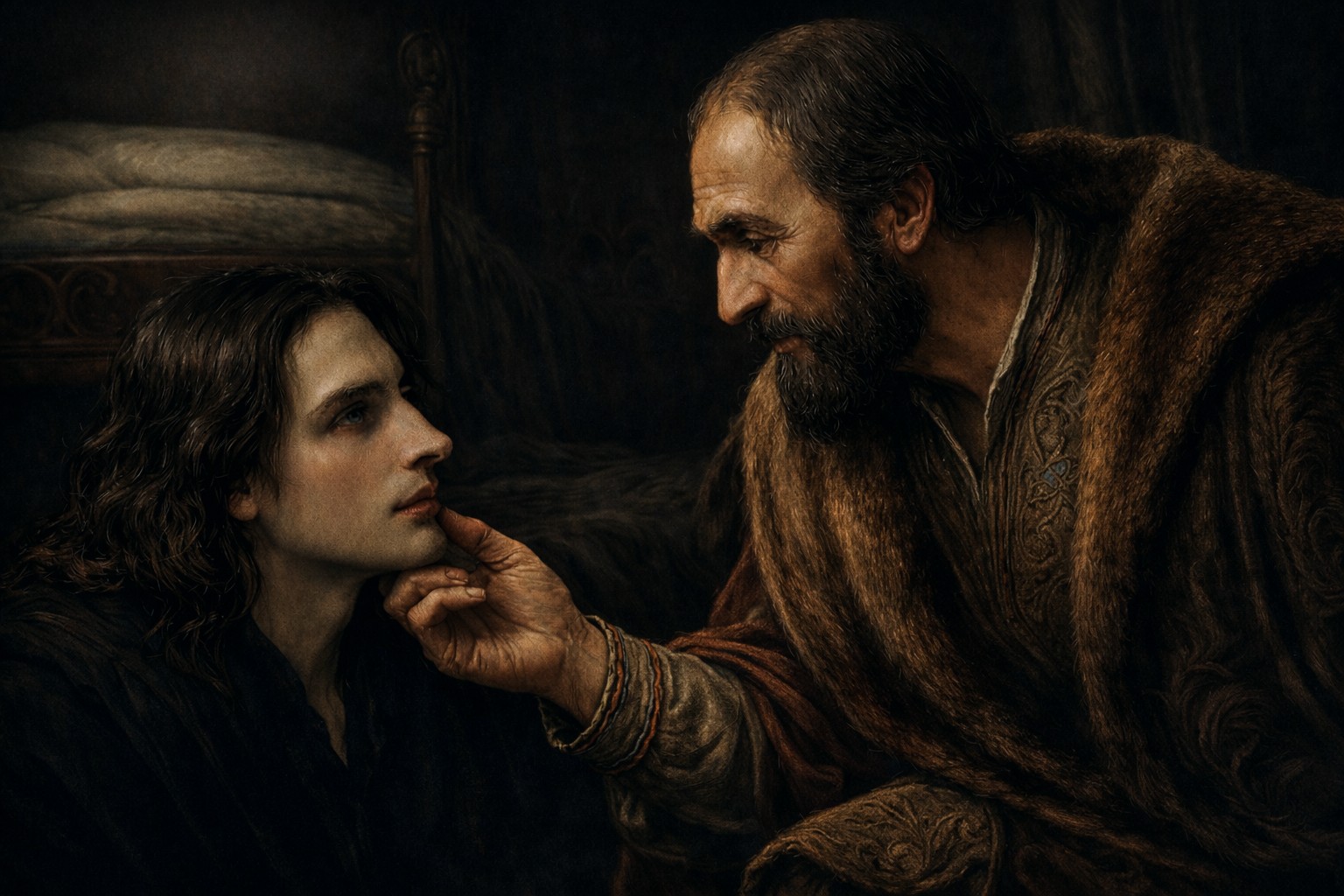
Vasily III
Vasily III was Grand Prince of Moscow and ruler of the Russian state from 1505 to 1533. His reign is generally considered successful: stone construction expanded; Pskov, Smolensk, and Ryazan were incorporated into the state; and the country continued to recover after centuries of dependence on the Horde — the Mongol political domination often referred to as the “Tatar Yoke” — along with the raids and devastation associated with it.
During Vasily III’s lifetime, rumors circulated both inside the country and abroad that he was homosexual. He married twice. His first wife was Solomonia Saburova: she married him at around fifteen, while Vasily himself was about twenty-six. By the standards of the time, this did look like a late marriage for a ruler expected to produce heirs as early as possible.
Vasily and Solomonia lived together for about twenty years, but they had no children. In sources and later retellings, this is usually attributed to Solomonia’s infertility. After years of unsuccessful attempts, the tsar obtained a divorce — a process complicated by resistance from the church. In the Orthodox tradition of that era, a ruler’s divorce was exceptionally difficult and required serious grounds. Roughly a year later, Vasily entered a new marriage with Elena Glinskaya, who was very young — about sixteen.
Four years after the wedding, Elena gave birth to Vasily’s son Ivan, later known as Ivan the Terrible, and two years after that a second son, Yuri, was born.
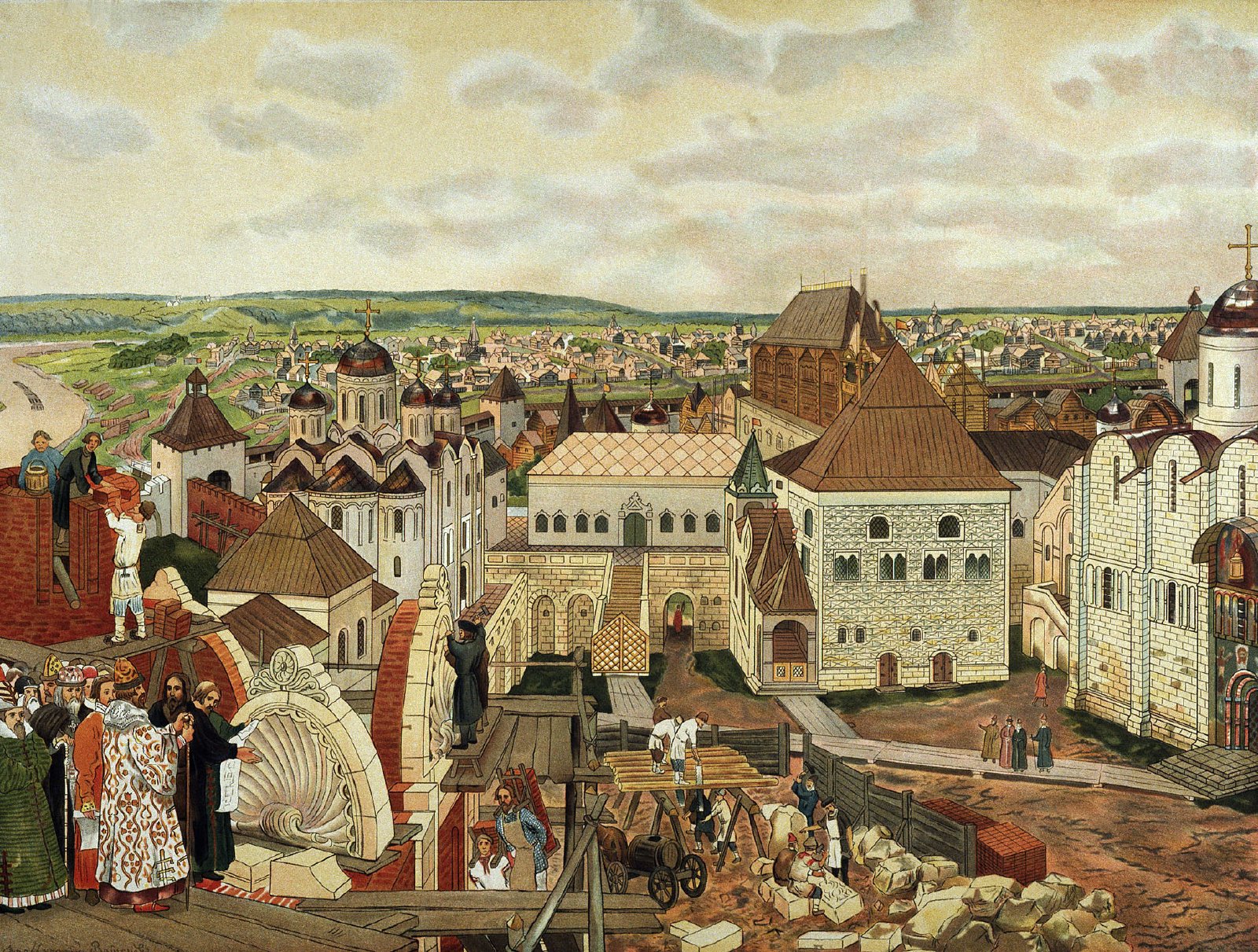
The rumors about Vasily III’s homosexuality were reinforced by foreign accounts from those who came to Russia during his reign and described court customs that struck them as unusual. They claimed that there was a fashion at court for “effeminate youths” drawn from the children of boyars. The “children of boyars” were a service class — essentially junior nobles — who received land and status in exchange for military and state service.
According to these observers, the Grand Prince took such young men under his patronage, granting them maintenance and pay. Among those who recorded such impressions, the Holy Roman Empire diplomat Sigismund von Herberstein is often mentioned. He visited Russia twice and described what he saw and heard in his Notes on Muscovy.
Another European author, the Italian Paolo Giovio, also wrote about Vasily III’s homosexuality, but it is important to understand the source of his information: Giovio never visited Russia and relied on reports from other envoys and travelers.
“He was also burdened with a vile vice […], felt revulsion toward women, and accordingly transferred his lust to the other sex; for by a custom long rooted among the Muscovites, it is permitted — after the manner of the Greeks — to love youths…”
— Paolo Giovio, Italian historian, on Vasily III
In some modern online articles, even more sensational stories appear — for example, that Vasily III could not perform his marital duty without the presence of a naked sotnik (literally “commander of a hundred”) from the palace guard. However, such claims are not supported by historical sources and most likely belong to later invention.
Vasily III’s private life should be discussed cautiously. The rumors may have been exaggerated. His first wife, Solomonia, may indeed have suffered from infertility.
It is also important to consider the broader context of foreign testimony: Europeans of that period often portrayed Russia as a “wild” and alien state, and this attitude could intensify bias — encouraging harsher language and a preference for repeating the most striking rumors.
At the same time, given all the available evidence, homosexuality cannot be entirely ruled out as part of Vasily III’s identity.
Ivan IV “The Terrible” and Fyodor Basmanov
After Vasily III died in 1533, his son and heir was only three years old. Formally, Ivan was already regarded as the sovereign, but he was far too young to rule, so power passed to regents. In the Muscovite state of the mid-sixteenth century, this role was held — in turn or jointly — by the boyars (the high nobility), Ivan’s mother, and representatives of the church.
In 1545, when Ivan turned fifteen, he began to rule in his own right. Two years later he was crowned and adopted a new title for Russia: tsar. In European eyes, it was closer to an imperial status.
“Handsome in appearance.”
— Venetian envoy Marco Foscarini on the looks of the 27-year-old Ivan the Terrible
From the start of his independent rule, Ivan IV pursued reforms aimed at centralizing power and strengthening the state.
Under him, a regular corps appeared: the streltsy (literally “shooters”), a state infantry force armed with firearms. Ivan introduced changes in administration, the courts, and taxation. His greatest military successes included the annexation of Kazan and Astrakhan — khanates on the Volga. He also established trade relations with England.
By the standards of his time, Ivan was well educated: he read and wrote extensively and even composed poetry.
“…no sovereign in our early history was distinguished by such eagerness and such skill in conversation and dispute — by word of mouth or in writing — whether in the public square, at a church council, with a boyar who had departed, or with foreign envoys; hence he received the nickname, for his verbal wisdom, of a rhetorician.”
— Russian historian Sergei M. Solovyov, on Ivan the Terrible
Ivan IV’s marital history is complicated. Officially, he married four times, and the number of unofficial wives, according to some accounts, may have reached seven. The English traveler Jerome Horsey, who claimed to have known the tsar personally, wrote that Ivan boasted of seducing a thousand girls and killing a thousand of his own children.
At the same time, rumors circulated that Ivan’s interest extended beyond women. His alleged lover was Fyodor Basmanov.
Fyodor Basmanov came from a noble family. His father, Aleksei Basmanov, served Ivan from early on as a voivode — a military commander responsible for regiments, campaigns, and defense. Aleksei took part in most of the tsar’s operations, including the conquest of Kazan, raids toward Crimea, and fighting near Narva. In one battle near the village of Sudbishche (today in Oryol Oblast), with a detachment of seven thousand men he reportedly repelled an attack by a sixty-thousand-strong Tatar force.
As Fyodor grew up, he too joined campaigns and kept pace with his father. Together they repelled a Tatar attack near Ryazan. In 1555, for his service, Aleksei was elevated to the rank of boyar, entering the top tier of the nobility and gaining still greater influence. He became one of Ivan the Terrible’s trusted men and introduced his son to the tsar. Soon Fyodor, too, received the title of boyar, and in 1566 he was appointed kravchiy.
A kravchiy (roughly “cupbearer” or “master of the table”) was not merely a servant who brought food and drink. In the sixteenth century it was one of the key posts at court, directly tied to the sovereign’s safety. The kravchiy oversaw the tsar’s table — inspecting food and drink, supervising utensils and procedure — and therefore guarded the tsar’s health and life. Fear of poisoning was entirely real. That is why the kravchiy was among the ruler’s closest attendants, and the office brought major privileges. Fyodor received the town of Gorokhovets as a personal holding (today in Vladimir Oblast).
Fyodor also became an oprichnik — a member of the tsar’s personal force and the enforcement arm of the oprichnina. Here it is worth explaining what the oprichnina was.
Put simply, the oprichnina was a repressive system and a special form of governance created by Ivan to fight the boyar elite, whom he suspected of treason and conspiracy. The country was split into two parts: one fell under the tsar’s direct rule and was called the oprichnina; the other remained under more familiar administration but suffered confiscations, violence, and raids by the oprichniki. Historians still argue whether this policy was primarily an expression of the tsar’s fear and suspicion, or a calculated attempt to break the old elite and replace it with a new one personally loyal to him. For understanding Basmanov’s role, however, the main point is this: an oprichnik was part of a machinery of terror — close to the tsar and protected by his power.
“He is so prone to anger that, when seized by it, he foams at the mouth like a horse and falls into something like madness; in that state he rages even at those he meets along the way.”
— Envoy Daniel, Prince of Buchau, on Ivan the Terrible
Fyodor Basmanov became one of Ivan the Terrible’s closest associates. Alongside his duties at the tsar’s table, he took part in executions carried out on the tsar’s orders and led specific operations. For example, in the summer of 1568 he was sent to Dankov (today in Lipetsk Oblast) to deal with two voivodes.
“…the cupbearer Fyodor, fair of face and foul of soul, without whom Ivan could neither make merry at feasts nor revel in killings.”
— Russian historian Nikolai M. Karamzin
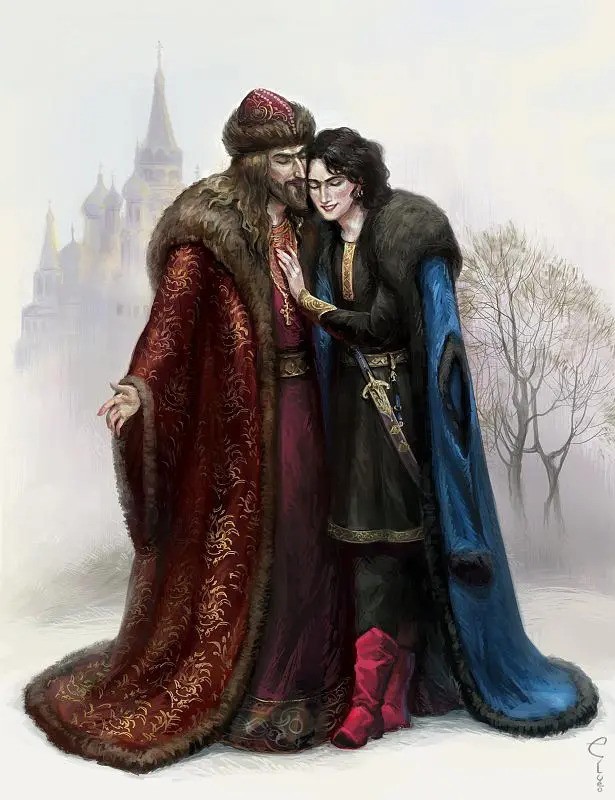
A similar pattern appears in the story of Prince Dmitry Ovchinin, who in different retellings is called Obolensky-Ovchinin or simply by the nickname Ovchina (literally “sheepskin”). The tsar devised an execution staged as an extension of a feast. At the table he ordered the prince to drain an enormous cup of wine “to the sovereign’s health,” then commanded him to go down into the wine cellar and drink there “whatever he likes and as much as he wants.” But in the cellar the tsar’s dogs were already waiting, and they tore Ovchinin to pieces. This episode was described by a German nobleman who served as a translator at court.
“The young prince Dmitry Obolensky-Ovchinin […] was executed on a single report for having quarreled with the young Fyodor Basmanov, Ivan’s favorite, and saying to him: ‘I and my forefathers have always served the sovereign to good purpose, but you serve him with filthy sodomy.’”
— Russian historian Sergei M. Solovyov
“And so Ovchina goes down into the wine cellars with those who, by the tyrant’s order, were to treat him to so lavish a banquet; but there the kennelmen were waiting for him, prepared and trained by the tyrant so that, as soon as Prince Ovchina entered, they would strangle him. […] The reason for his secret death was that, amid quarrels and abuse with Fyodor, Basman’s son, Ovchina reproached him with a shameful deed that he was wont to commit with the tyrant. Namely, the tyrant abused Fyodor’s affection, and Fyodor was accustomed to bring everyone under the tyrant’s wrath. And this was why, when Prince Ovchina cursed him for it […], Fyodor, inflamed with anger, went to the tyrant in tears and accused Ovchina.”
— Albert Schlichting, from “A Brief Account of the Character and Brutal Rule of Vasilevich, Tyrant of Muscovy”
Fyodor’s closeness to the tsar extended so far that he received an assignment involving the very top of the church hierarchy. It concerned Philip, Metropolitan of Moscow and All Rus’ — one of the most influential church leaders in the country and, in effect, the head of the Russian Church. Philip dared to speak out against Ivan the Terrible’s repressions: some boyars asked him to intercede with the tsar. During a service in the Dormition Cathedral of the Kremlin, the metropolitan publicly appealed to Ivan to “stop spilling Christian blood.” Ivan did not stop; he intensified the terror.
Soon after, in the middle of a church service, Fyodor Basmanov announced that Metropolitan Philip was to be deprived of his rank — that is, stripped of his ecclesiastical office and authority. Philip was sent to a dungeon, and later he was strangled by an executioner.
History often turns on a grim irony: those who take part in executions and reprisals may later become victims themselves. The end of the Basmanov family remains unclear, because several versions of their deaths exist. One holds that father and son fell from favor after being suspected of plotting with the Lithuanian king and betraying the tsar.
“Aleksei [Basmanov] and his son [Fyodor], with whom the Grand Prince used to practice lechery, were killed.”
— Heinrich von Staden, German author of memoirs about Muscovy
Andrei Kurbsky, a former commander of Ivan the Terrible who later fled to the Grand Duchy of Lithuania and from there conducted his famous correspondence with the tsar, offered an even darker version. According to him, Fyodor killed his own father.
“…the voivode of the demonic, infernal host — the tsar’s lover, Fyodor Basmanov — slit with his own hand the throat of his father Aleksei, a most celebrated flatterer, but in truth a madman and the ruin of both himself and the Holy-Rus’ (Russian) land. O righteous God! How righteous, O Lord, are Thy judgments! What he prepared for his brothers, he himself soon tasted!”
— Andrei Kurbsky
These texts also underscore a telling detail: in his replies to Kurbsky’s accusations, Ivan the Terrible did not react in any way to the phrase “the tsar’s lover.” He did not directly refute or even discuss that part of the charge.
According to another version, the Basmanovs were exiled to Beloozero (today in Vologda Oblast), where they “ceased to exist while in disgrace.” One way or another, by January 1571 Fyodor Basmanov was already dead. Counting from his appointment as kravchiy in 1566, that means he held the post for about five years and remained one of the tsar’s closest men at court.
After Fyodor’s death, Tsar Ivan IV made a monastic donation on behalf of him and his relatives: he paid for their names to be commemorated regularly in church services and, year after year, for the established “lesser feeding” to be performed — a modest memorial meal.
“In the year 7091 (1583), the Tsar Sovereign and Grand Prince Ivan Vasilyevich of all Rus’ gave, for the sake of eternal commemoration, for Aleksei Fyodorovich Basmanov and for his children Fyodor and Petr, 455 rubles — so that the lesser feeding be provided for them year after year, as long as this holy monastery stands.”
— “Historical Description of the Holy Trinity Lavra of St. Sergius”
Basmanov in Literature and Cinema
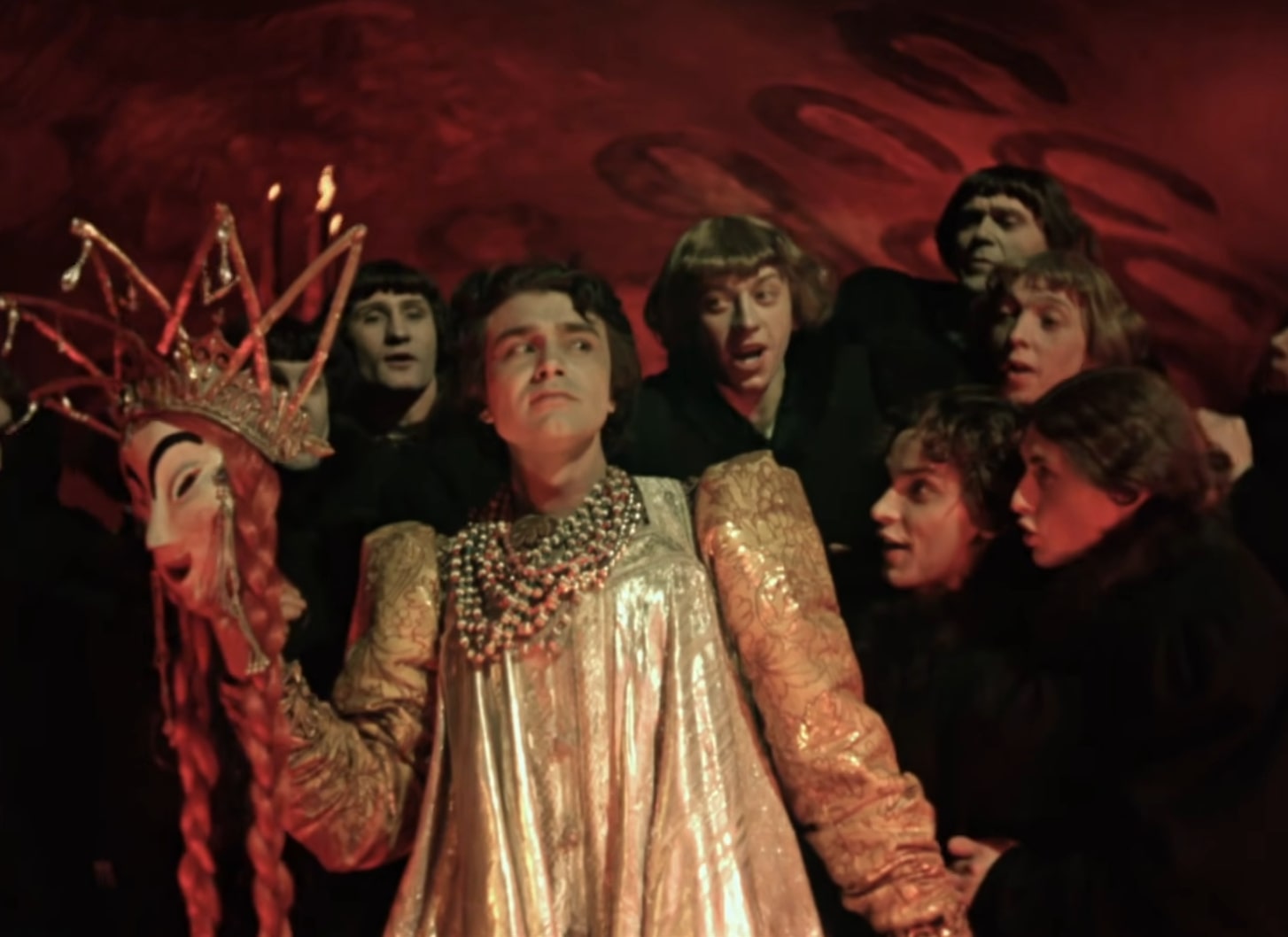
Fyodor Basmanov’s image became firmly established in literature and cinema, especially in connection with his relationship with Ivan the Terrible.
In Aleksei Tolstoy’s historical novel Prince Serebryany (often included in school curricula in Russia), Basmanov is portrayed as a corrupt but capable warrior and the tsar’s favorite. Tolstoy also ties Basmanov’s court role to a demonstrative “femininity” in behavior. He writes that Basmanov “in a letnik, like a girl, danced.” A letnik is an old Russian women’s outer garment.
“— Where would he find one, — Basmanov went on, as if spurred to still greater insolence, — where would he find a servant handsomer than me? Have you ever seen eyebrows like mine? Aren’t these eyebrows sable? And my hair? Touch it, prince — feel it: it’s silk… truly — silk!
Disgust showed on Serebryany’s face. Basmanov noticed and continued, as though meaning to tease his guest:
— And my hands, look, prince — aren’t they like a girl’s? Only today I’ve rubbed them a bit. That’s just my nature: I spare myself in nothing!
— Indeed you spare yourself in nothing, — said Serebryany, no longer able to contain his indignation. — If even half of what people say about you is true…
— And what do they say about me? — Basmanov cut in, narrowing his eyes slyly.
— What you yourself are telling me would be enough; but they also say that before the tsar, God forgive me, you dance like a maiden in a light summer gown!
Basmanov’s face flushed, but he called on his usual shamelessness for help.
— And what of it, — he said, putting on a careless air, — if I truly do dance?”
— Aleksei Tolstoy, novel “Prince Serebryany”
The scene of dancing before the tsar is not confirmed by historical sources. Nevertheless, it is precisely this artistic device — the suggestion of intimacy, conveyed through gesture and tension — that the director Sergei Eisenstein used in his film Ivan the Terrible. In his movie, as in Tolstoy’s novel, Basmanov’s closeness to the tsar is emphasized through hints that can be read as covert homoeroticism.
Similar motifs are also noted in the film Tsar Ivan the Terrible (1991). One memorable moment there is Basmanov’s arrest: as he shouts after the tsar, he flings out an accusation — “And my sins are the same as yours!” — a reference to their presumed intimacy.
References and Sources
- Йовий П. Описания прославленных мужей. 1546. [Paolo Giovio - Descriptions of Famous Men]
- Герберштейн С. фон. Записки о Московии. 1549. [Sigismund von Herberstein - Notes on Muscovy]
- Курбский А. М. История о великом князе Московском. [Andrei M. Kurbsky - History of the Grand Prince of Moscow]
- Соловьёв С. М. История России с древнейших времён. Т. 6. [Sergei M. Solovyov - History of Russia from the Earliest Times (Vol. 6)]
- Толстой А. К. Князь Серебряный: повесть времён Ивана Грозного. 1862. [Aleksei K. Tolstoy - Prince Serebryany: A Story of the Times of Ivan the Terrible]
- Флоря Б. Н. Иван Грозный. [Boris N. Florya - Ivan the Terrible]
🇷🇺 LGBT History of Russia
General history
- Homosexuality in Ancient and Medieval Russia
- The Story of a Medieval Arabic Source in Which the Women of the 'Rus' Were Called the World's First Lesbians
- The Homosexuality of Russian Tsars Vasily III and Ivan IV the Terrible
- Peter the Great’s Sexuality: Wives, Mistresses, Men, and His Relationship with Menshikov
- Homosexuality in the 18th-Century Russian Empire — Homophobic Laws Borrowed From Europe and How They Were Enforced
- Russian Empress Anna Leopoldovna and the Maid of Honour Juliana: Possibly the First Documented Lesbian Relationship in Russian History
Folklore
Biographies
- Saint Moses the Hungarian – One of the First Queer Figures in Russian History?
- Grigory Teplov and the Sodomy Case in 18th-Century Russia
- Russian Poet Ivan Dmitriev, Young Favourites, and Same-Sex Desire in the Fables 'The Two Doves' and 'The Two Friends'
- The Diary of Pyotr Medvedev, a Bisexual Moscow Merchant, 1854–1863
- Sergei Romanov: A Homosexual Member of the Imperial Family
- The Possible Homosexuality of Grand Duke Nikolai Mikhailovich of the Romanov Family
- Andrey Avinoff: A Russian Émigré Artist, Gay Man, and Scientist
 Subscribe to our Telegram channel (in Russian): Urania. With Telegram Premium, you can translate posts in-app. Without it, many posts link to our website, where you can switch languages — most new articles are published in multiple languages from the start.