Homosexuality in the 18th-Century Russian Empire — Homophobic Laws Borrowed From Europe and How They Were Enforced
From Peter the Great to Alexander I.
Contents

The 18th century was a time when Russia was becoming one of the leading powers of Europe. It was also when the state for the first time established a punishment for male same-sex relations in secular law. Under Peter the Great, in 1706, Russia adopted an especially harsh provision borrowed from Western European practice — death by burning. At first, it applied only to the military, above all to soldiers.
This article examines how the first rules against muzhelozhstvo (literally “lying with a man”) appeared in Russia, and how homosexuality was generally treated in the 18th century. To do so, we will look at several criminal cases, a nobleman’s love letter to his coachman, accusations of violence against serfs, and a scandal in a monastery.
The degree of condemnation and persecution of same-sex relations varied across different periods of Russian history. It depended on the role of the Church, the position of the authorities, social norms, and the overall character of the legal culture.
In many periods of Russian history, attitudes toward homosexuality were milder than in a number of other countries. But they cannot be described as an unbroken line of tolerance, nor as a history of constant severity. Rather, these were wave-like shifts — from relatively calm acceptance to severe punishments.
The 18th century can be seen as the beginning of a transition from a comparatively mild response to criminal prosecution.
A Window to Europe and the First Secular Punishments Under Peter the Great
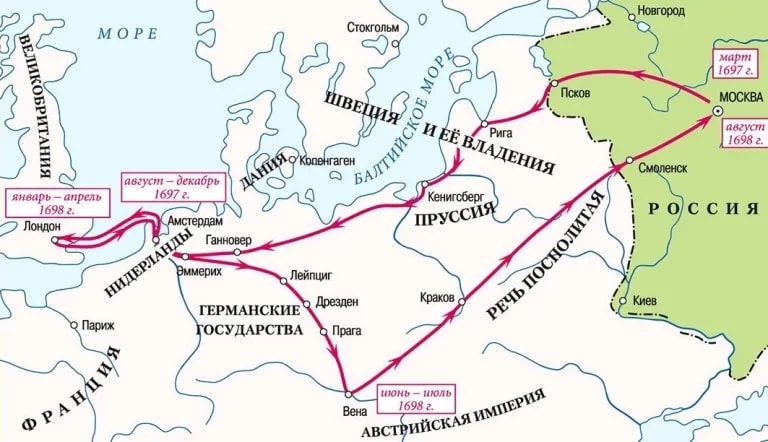
In 1697–1698, Peter I set out for Western Europe as part of the “Grand Embassy”. This was a major diplomatic mission intended to strengthen Russia’s ties with other states and to help adopt Western methods of governance. Peter visited, among other places, England and the Netherlands. In those countries, same-sex relations were considered a grave offence against public morality and were punishable by death.
Peter the Great sought to rebuild the state along a European model, and the army became one of the main areas of reform. Standing armies appeared with unified regulations, discipline, training, and a system of punishments.
While preparing new regulations, Peter studied Western European military codes — collections of rules used to judge and punish soldiers. Many of those codes specifically mentioned the “sin of Sodom”. It was precisely this legal logic that then became the reference point for Russian military law as well.
In 1706, for the first time in Russia, a secular punishment for homosexual relations was established. It appeared in the Kratkii artikul (“Short Article”). The document was compiled on the basis of the “Saxon Military Code”, that is, on legal models from the German lands. Its author was the German Heinrich von Huyssen, who served under Peter the Great and took part in his reforms.
At first, this military criminal code was intended for foreigners in Russian service, recruited from Europe. Later it was translated and extended to the Russian cavalry under the command of Prince Alexander Danilovich Menshikov.
The Kratkii artikul prescribed death by burning for homosexual relations. Burning as a form of execution was rare in itself and was usually applied in special cases connected with “heresy”. No documents have been found that would confirm the actual enforcement of this specific article of the Kratkii artikul.
“Chapter III. On adultery, or what pertains to whom.
- Whoever commits unnatural adultery with livestock, or a man with a man commits shame, shall be executed and burned; the same punishment awaits those who commit debauchery with boys.”
— from the “Short Article” (Kratkii artikul)
Ten years later, in 1716, Russia introduced Peter the Great’s Voinskii ustav (“Military Statute”). This was a more complete normative act that set out the order of service in the army and described in detail military crimes and the punishments for them.
The new statute was also based on foreign experience. It used ideas and wording from the Swedish military statute, Saxon and French legal norms, as well as provisions of the earlier Kratkii artikul.
The Voinskii ustav listed a broad range of crimes: treason, fights, theft, attempted suicide, and other offences. Compared to pre-Petrine practices, it was especially harsh. The death penalty could be imposed not only for murder and treason, but also for witchcraft, blasphemy, indecent statements about the monarch, insults directed at generals, incest, and even for theft if the sum exceeded twenty roubles.
Among the punishable acts was “sodomy”, borrowed from the Kratkii artikul. But in the new version, the punishment was softened.
If the relations were considered consensual, corporal punishment was imposed, such as beatings. Forced acts were treated as a more serious crime: they could lead to the death penalty or exile to the galleys. Galleys were large oared ships, and “exile to the galleys” meant penal labour under extremely harsh conditions for a long term, sometimes for life. The appearance of this particular punishment is usually linked to the influence of Swedish military norms.
In 1720, the Morskoi ustav (“Naval Statute”) was adopted. It established similar punishments for those serving in the navy and extended the approach of the Voinskii ustav to naval service.
“Chapter XX. On the sin of Sodom, violence, and debauchery.
Article 166. If anyone defiles a youth, or a man commits sodomy with a man, they — as mentioned in the previous article — are to be punished (note — to be punished severely on the body). But if it was done by force, then punish by death or by lifelong exile to the galleys.”
— from the “Military Statute” (Voinskii ustav)
Archival records do preserve cases where “a man commits sodomy with a man”, but it is difficult to assess the scale of such prosecutions. Across the entire 18th century, no more than fifty criminal cases were recorded on charges related to homosexual relations, and actual sentences were rare. Moreover, from 1744 the death penalty in Russia was restricted to crimes against the state, and therefore between 1741 and 1761 not a single execution was carried out in the country.
At the same time, in Europe punishments were much harsher. In the Netherlands in 1730–1731, mass persecutions of homosexuals began, resembling a “witch hunt”. They were blamed for natural disasters, including earthquakes and floods. Around three hundred people were executed on these charges.
The Petrine Era and Court Morals
In the Renaissance and early modern period, at European courts — especially the French court — sexual promiscuity and lack of selectiveness were considered commonplace. Sources and assessments by some authors mention numerous affairs, the absence of stable norms of fidelity, as well as group orgies and incest. Already in the 17th century, attempts to rein in these excesses began in Western Europe.
In Russia, the process was different. Among the elite, two movements were happening simultaneously: a noticeable loosening of restraints compared to the previous era, and at the same time a kind of “civilising”.
These changes are often linked to the personality of Peter the Great. The 18th-century prince and political writer Mikhail Shcherbatov wrote that it was precisely from the Petrine era that the “corruption of morals” in Russia began:
“…morals, which, for lack of any other enlightenment, had been corrected by faith, having lost that support, began to slide into debauchery — for this example of violating the sacrament of marriage, which is by its nature inviolable, showed that one could violate it without punishment.”
— Prince Mikhail Mikhailovich Shcherbatov
Shcherbatov was speaking above all about the elite. At the same time, the pre-Petrine era should not be imagined as completely “chaste” and strict. The changes under Peter simply made certain practices more visible, more legitimised, or shaped them in new ways.
A Nobleman’s Love Letter to His Coachman
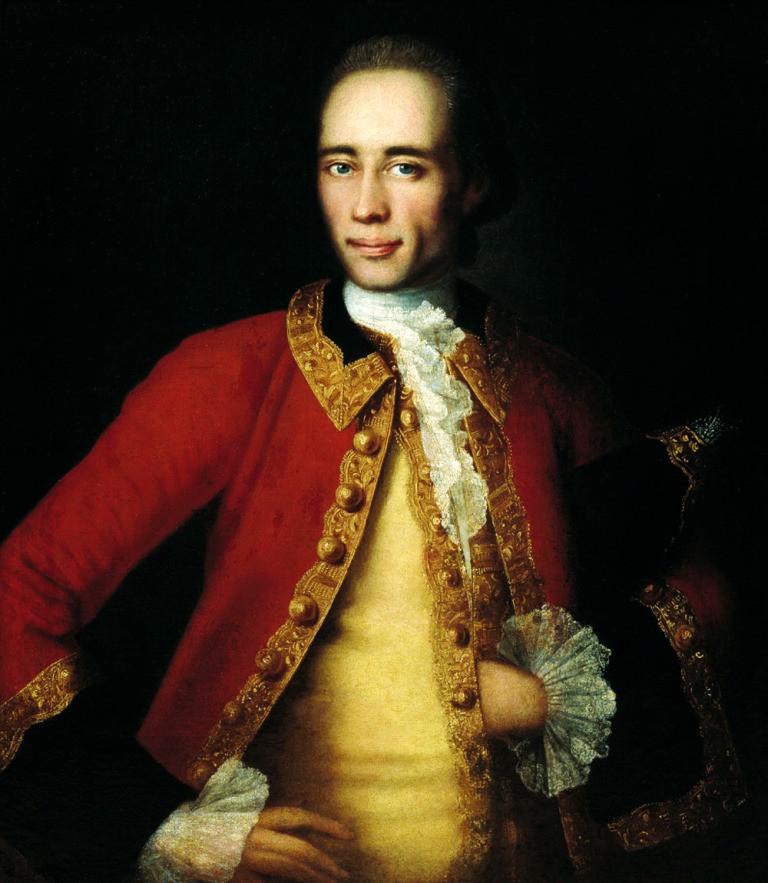
A telling case comes from the 1740s. In the Russian State Archive of Ancient Acts, a love letter has survived, written by a St Petersburg nobleman, Andrey Ivanovich Molchanov, who held a significant post in the police chancellery, to a local furmanshchik (a coachman, that is, a hired carriage driver).
“My dear friend Vasylyushka — you are tall in stature but small in love; it seems I am no longer needed by you. I haven’t seen you for three days and already it’s become lonely. It hurts that I got used to you and cannot forget you, while you have abandoned me… On Tuesday, if I’m still alive, I’ll come to steam in the bathhouse with you…”
— Andrey Ivanovich Molchanov, from a note to a coachman
After the authorities learned about the letter, an investigation was opened. The investigators were primarily interested not in the love affair itself, but in its social and service-related meaning. They tried to understand why Vasylyushka had “amorous dealings” with a councillor of the police chancellery, and why a man of a lower estate was maintaining a special relationship with a member of the nobility. In the logic of a bureaucratic investigation, such closeness could be concealing a bribe, an abuse of office, or some other corruption-related crime.
The inquiry found neither bribery nor any other illegal benefit. After that, interest in the case evaporated, and the investigation was closed. At that time, punishment for same-sex relations applied only to servicemen, and Molchanov was not in the military.
Catherine the Great: Draft Laws and Further Softening
After the death of Peter the Great, Russia continued to borrow European ideas about morality. This turn toward a European model is clearly visible in attempts to make criminal law more systematic and comprehensible. For this purpose, Legislative Commissions were created — temporary bodies tasked with preparing a new code of laws. They included officials appointed by the state and elected representatives of different social estates.
In the draft “Criminal Code” of 1754–1766, an article on the “sin of Sodom” appeared. The punishments in it depended on the age of the accused. For those under 15, the punishment was birching — flogging with thin rods. For those aged 15 to 21, birching was supplemented with exile to a monastery “for correction”. Adult men faced flogging with the knout and lifelong exile to Siberia.
This draft was never adopted. But it shows a shift in approach: instead of the death penalty, other measures were proposed. They were “milder” only in the sense of refusing execution, but remained extremely harsh in themselves.
The Case of Grigory Teplov
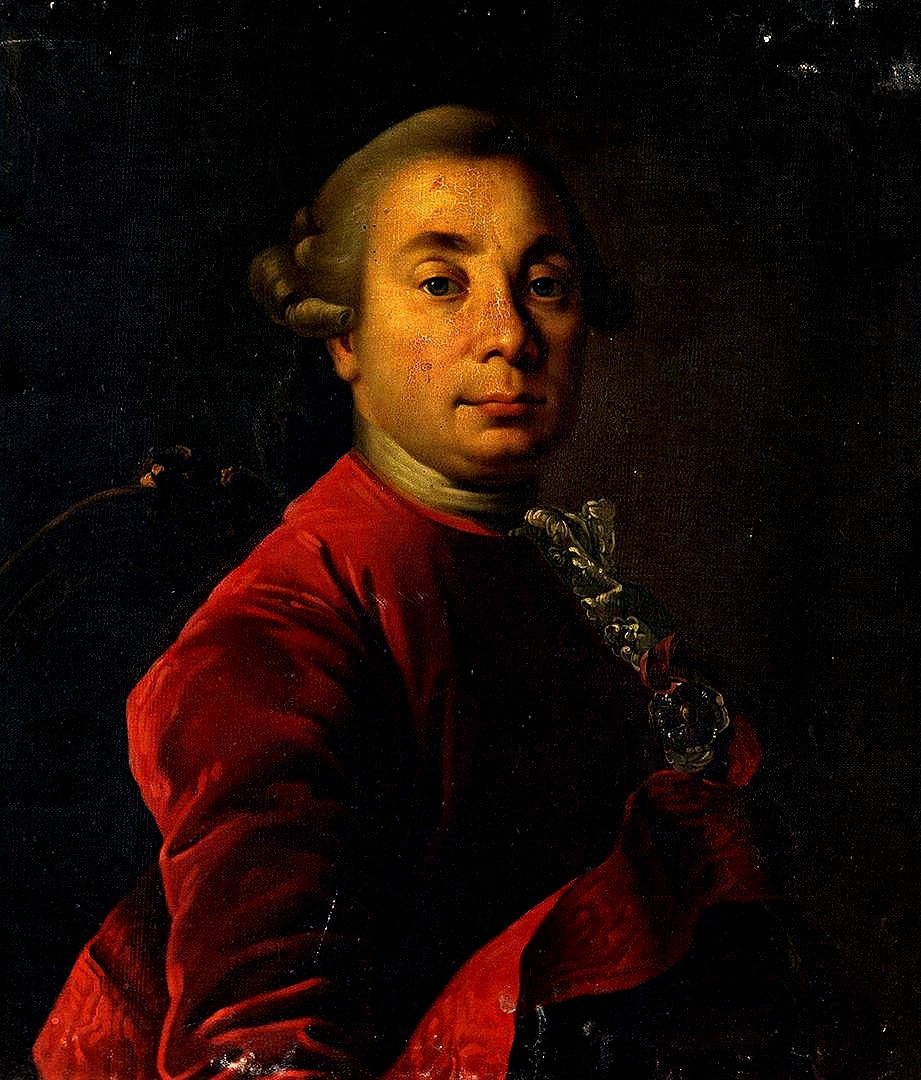
In the 1760s, proceedings were held in the case of the influential statesman Grigory Nikolayevich Teplov. His serf servants filed a complaint accusing him of harassment. In Russia, nobles could indeed coerce serfs into intimate relations. For the nobility, sexual violence could serve as a way of demonstrating power and confirming “masculinity” as they understood it.
Such complaints often did not lead to punishment for a nobleman. The state preferred to close such cases, apparently fearing that an official acknowledgement of an influential person’s guilt would increase peasant discontent and undermine the stability of the system.
In Teplov’s case, Catherine the Great rejected the accusations. The case was closed, and Teplov soon received a promotion and was appointed to the Senate — one of the empire’s highest bodies of government and justice. The peasants who dared to file the complaint were exiled to Siberia.
Teplov himself was married twice and had three children. For the 18th century this did not look like a contradiction. Same-sex relationships could coexist with a heterosexual marriage, because marriage often served a social function or acted as cover to preserve honour and avoid scandal. In surviving open criminal cases for “male sodomy”, the accused men were married.
“Shame and Disgrace” Instead of Corporal Punishment
Later, the line set by the Military Statute softened even further. In Catherine the Great’s Nakaz (“Instruction”) of 1767, where the empress laid out the foundations of her policy and the principles for future legislation, corporal punishments for homosexual relations were no longer mentioned. Catherine believed that “shame and disgrace” — that is, public condemnation — could be a sufficient measure.
A significant part of the Nakaz drew on the ideas of the Western European Enlightenment — an 18th-century intellectual movement that called for laws to be made more rational and humane. Among the thinkers whose ideas Catherine used, Montesquieu, Diderot, and d’Alembert are usually named.
“All punishments that can disfigure the human body should be abolished.”
— Catherine II (Catherine the Great)
In Europe at the same time, the opposite was happening. In 1768, the Austrian Empire adopted the criminal code known as the Constitutio Criminalis Theresiana, which prescribed the death penalty for homosexual relations. The code also included appendices with illustrations of torture devices and instructions on how to use them.
A Monastery Scandal: How the Church Handled Such Cases
In 1767, the Synod received a complaint from the Zheltovodsky Makaryev Monastery (the Makaryev Monastery on Yellow Lake), located in what is now the Nizhny Novgorod region. In the Russian Empire, the Synod was the highest governing body of the Church and at the same time the highest ecclesiastical court.
The complaint was filed by Archimandrite Ambrose, the abbot of the monastery. He reported that the monk Anatoly, who had previously been exiled to the monastery for earlier misconduct, regularly had intimate relations with his young attendant Vasily. In this context, a “young attendant” was a young helper attached to the monastery who carried out small errands.
Before appealing to the Synod, Ambrose tried to resolve the matter within the monastery. He urged Anatoly to end the relationship. Anatoly repented and promised to mend his ways. He said he would stop seeing Vasily, but a few weeks later they were caught together again.
After that, Vasily was questioned, and he admitted that he had continued seeing Anatoly. At the same time, Vasily said he was upset about Anatoly’s affair with another young man — a new attendant. As punishment, Ambrose ordered both young men to be flogged and sent back to their families in nearby villages. But even after that, a few weeks later, Anatoly and Vasily were spotted together again.
That was when Ambrose appealed to the Synod. The investigation that followed revealed not only the relationship itself, but also an internal conflict in the monastery. The case materials surfaced mutual accusations of betrayal between Anatoly and Ambrose himself.
The outcome was this: Anatoly was transferred to another monastery, and the archimandrite received a reprimand. The reason for the reprimand was not that he had investigated the case poorly, but that he had appealed directly to the Synod, bypassing the archbishop. Under the rules, such complaints were supposed to go through the regional church authority. Ambrose was punished for violating administrative procedure.
This story shows that church authorities could display a certain degree of tolerance toward same-sex relations among clergy, in the sense that they did not seek to bring such cases to the harshest possible punishment. Formally, the accusations did not fall under secular law, because criminal provisions on same-sex relations applied only to soldiers. At the same time, the Synod retained its own church measures: it could suspend offending clergy from their duties or impose epitimia — a ban on receiving communion for a set period. The ones who suffered most in this story were the young men.
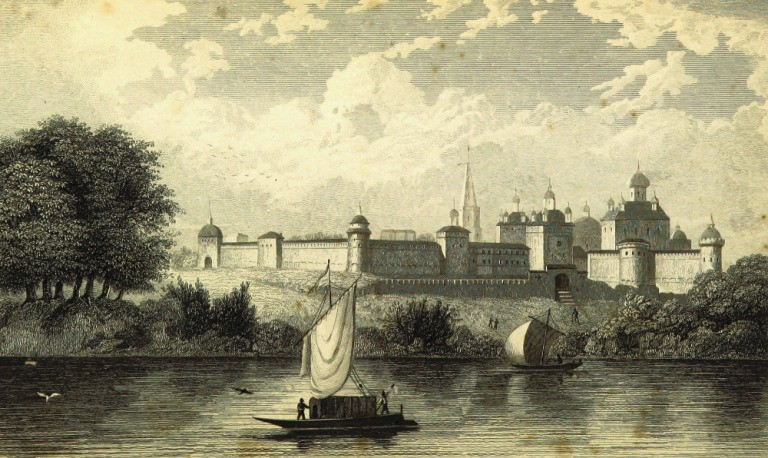
If a similar incident had occurred in most European countries of the 18th century, those involved would most likely have faced the death penalty. In Russia, despite borrowing from Europe in law and culture, homosexual relations were still not perceived as a threat to public order and rarely became the subject of real persecution. They were understood as a deviation from the norm, not as a grave crime that the state was obliged to punish with maximum severity.
Only at the end of the 18th century did a number of European countries begin to soften punishments for homosexual relations. In the 1780s–1790s, Austria and Prussia replaced the death penalty with imprisonment or confinement in correctional institutions. In France, during the Revolution, the new criminal code of 1791 abolished punishments for “crimes against morality”, including homosexual relations.
In Russia, by contrast, the opposite trend gradually emerged. In 1832, under Nicholas I, the Russian Empire introduced criminal punishment for the “sin of sodomy” for the civilian population. This article was included in general criminal law, not only in military regulations. But that is the subject of the next article.
References and Sources
- Акишин М. О. Военно-судебная реформа Петра Великого. [Akishin M. O. — Military-Judicial Reform of Peter the Great]
- Дан Х. Гомосексуальное влечение в революционной России. [Dan H. — Homosexual Desire in Revolutionary Russia]
- Кон И. С. Лунный свет на заре: лики и маски однополой любви. [Kon I. S. — Moonlight at Dawn: Faces and Masks of Same-Sex Love]
- Люблинский П. И. Преступления в области половых отношений. [Lyublinskiy P. I. — Crimes in the Sphere of Sexual Relations]
- Muravyeva M., Toivo R. M. Personalizing homosexuality and masculinity in early modern Russia.
🇷🇺 LGBT History of Russia
General history
- Homosexuality in Ancient and Medieval Russia
- The Story of a Medieval Arabic Source in Which the Women of the 'Rus' Were Called the World's First Lesbians
- The Homosexuality of Russian Tsars Vasily III and Ivan IV the Terrible
- Peter the Great’s Sexuality: Wives, Mistresses, Men, and His Relationship with Menshikov
- Homosexuality in the 18th-Century Russian Empire — Homophobic Laws Borrowed From Europe and How They Were Enforced
- Russian Empress Anna Leopoldovna and the Maid of Honour Juliana: Possibly the First Documented Lesbian Relationship in Russian History
Folklore
Biographies
- Saint Moses the Hungarian – One of the First Queer Figures in Russian History?
- Grigory Teplov and the Sodomy Case in 18th-Century Russia
- Russian Poet Ivan Dmitriev, Young Favourites, and Same-Sex Desire in the Fables 'The Two Doves' and 'The Two Friends'
- The Diary of Pyotr Medvedev, a Bisexual Moscow Merchant, 1854–1863
- Sergei Romanov: A Homosexual Member of the Imperial Family
- The Possible Homosexuality of Grand Duke Nikolai Mikhailovich of the Romanov Family
- Andrey Avinoff: A Russian Émigré Artist, Gay Man, and Scientist
 Subscribe to our Telegram channel (in Russian): Urania. With Telegram Premium, you can translate posts in-app. Without it, many posts link to our website, where you can switch languages — most new articles are published in multiple languages from the start.