Homosexuality in Ancient and Medieval Russia
Same-sex relationships and how they were viewed from Kievan Rus to Peter the Great.
Contents

While in England, the Netherlands, France, and Spain, people were burned at the stake and tortured for homosexuality, in Rus’ there was not a single secular law up to the 18th century that punished the “sin of Sodom.”
The absence of a specific provision in secular law did not mean approval. In ancient and medieval Rus’, same-sex relations were condemned by church rules. The Church regarded them as sinful and imposed epitimia — penance and restrictions on believers.
The degree of condemnation and persecution for homosexual relations changed across different periods of Russian history. It depended on the role of the Church, the position of the authorities, social norms, and the general character of the legal culture.
In many periods of Russian history, attitudes toward homosexuality were milder than in a number of other countries. But they cannot be described as a continuous line of tolerance or a history of unrelenting severity. Rather, the changes were wave-like: from relatively calm acceptance to harsh punishments.
The ancient and medieval periods of Russian history are usually classified among the eras when mild condemnation of this phenomenon prevailed. The state did not single it out as a separate criminal issue; the main judgment and “sanctions” came through religious norms and social ideas about what was permissible.
Sexual Norms in Ancient Rus'
Views of sexuality in ancient Rus’ took shape at the intersection of two traditions. On the one hand, old Slavic pagan customs persisted, in which sexual freedom was perceived as a natural part of life. On the other hand, a Christian worldview was gaining ground, one that regarded sexual relations outside marriage as sinful. Because of this, the same practice could be judged differently depending on whether it was viewed through the lens of old custom or church norms.
According to research by M. A. Koneva, the spread of same-sex relations in Rus’ can also be linked to constant warfare: men found themselves away from women’s company for long periods.
In the Russkaya Pravda (“Rus’ Justice”), the first secular law code of 11th-century Kievan Rus’, homosexuality is not mentioned at all.
The first attempts to regulate sexual life appear in church sources — the Kormchie books (12th–13th centuries). These were compilations of church rules and laws used by clergy and ecclesiastical courts.
Same-sex relations were described with the word “sodomy.” In the Old Russian church tradition, the term had a broad meaning: it referred not only to same-sex contact but also to other practices considered forbidden, including masturbation. Punishments ranged from penance to a temporary ban on receiving communion.
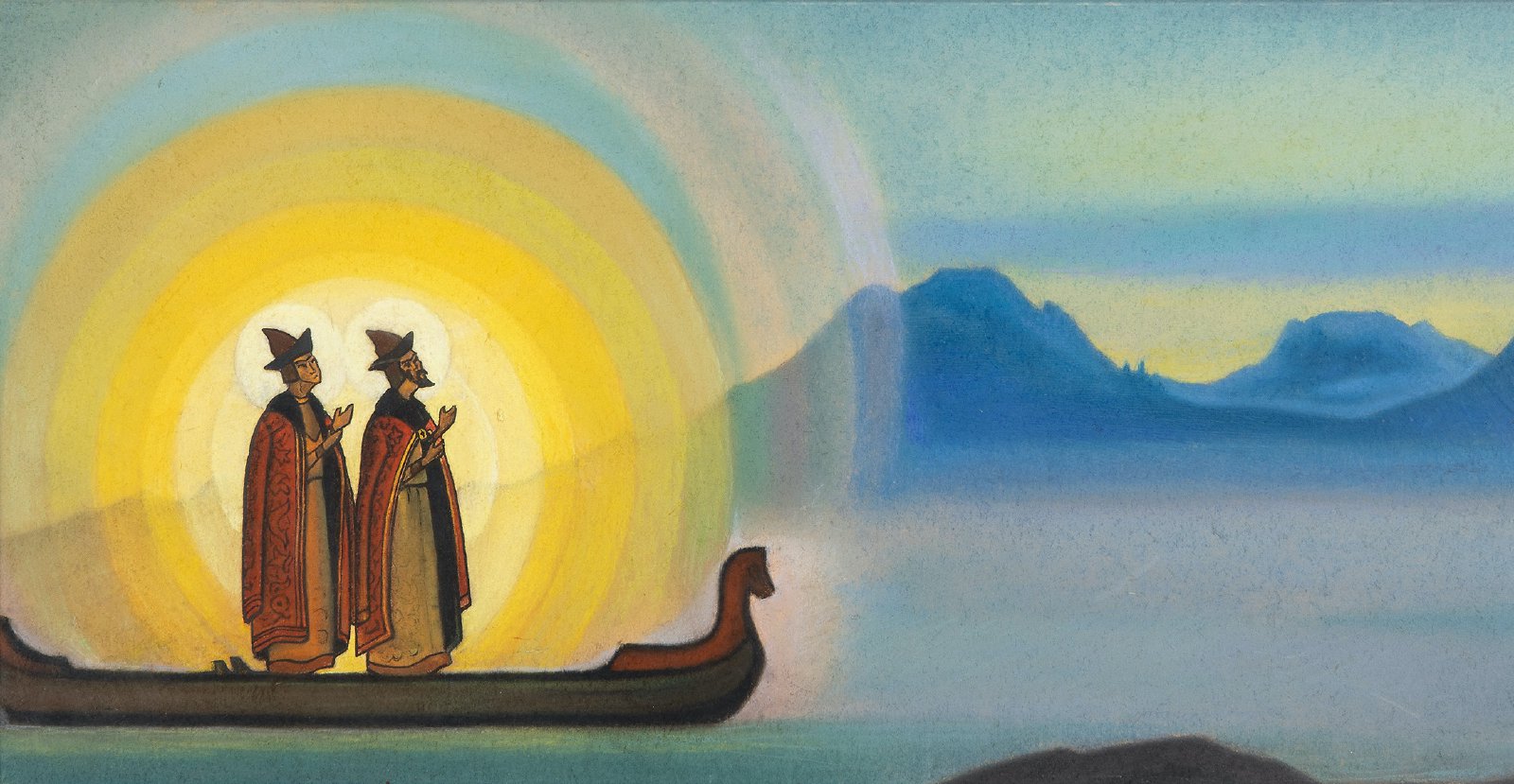
Saint Boris’s “Beloved Youth”
The early-20th-century Russian philosopher Vasily Rozanov wrote that one of the first “documented” references to same-sex relations in ancient Rus’ can be found in The Tale of Boris and Gleb. This is a work of Old Russian literature about Princes Boris and Gleb, sons of Prince Vladimir, who were later venerated as holy passion-bearers — people who accepted death without resistance.
The text mentions Prince Boris’s “beloved youth” — a young man named George, a Hungarian by origin. The word otrok in Old Russian referred to a young person, an adolescent, or a young attendant at a prince’s court. As a sign of special favor, the prince gave George a gold grivna — a decorative neck ring.
The subsequent events are tied to the struggle for power after Prince Vladimir’s death. In 1015, the men of Prince Sviatopolk — whom the chronicles call “the Accursed” — attacked Boris’s camp and killed him. George covered the prince’s body with his own:
“Seeing this, his youth covered the body of the blessed one [that is, Boris] with his own, crying out: ‘I will not leave you, my beloved lord — where the beauty of your body withers, there I too shall be granted to end my life!’”
— “The Tale of Boris and Gleb”
By itself, this passage does not prove a same-sex relationship. But for Rozanov it was one of the texts that allowed such an interpretation.
After this, George too was killed. Then Sviatopolk’s warriors tried to remove the gold grivna from his neck. They could not do it at once, because the ornament sat tightly and was very strong. So they cut off George’s head to take the precious item.
The Life of Moses the Hungarian: Chastity, Violence, and Possible Sexual Connotations
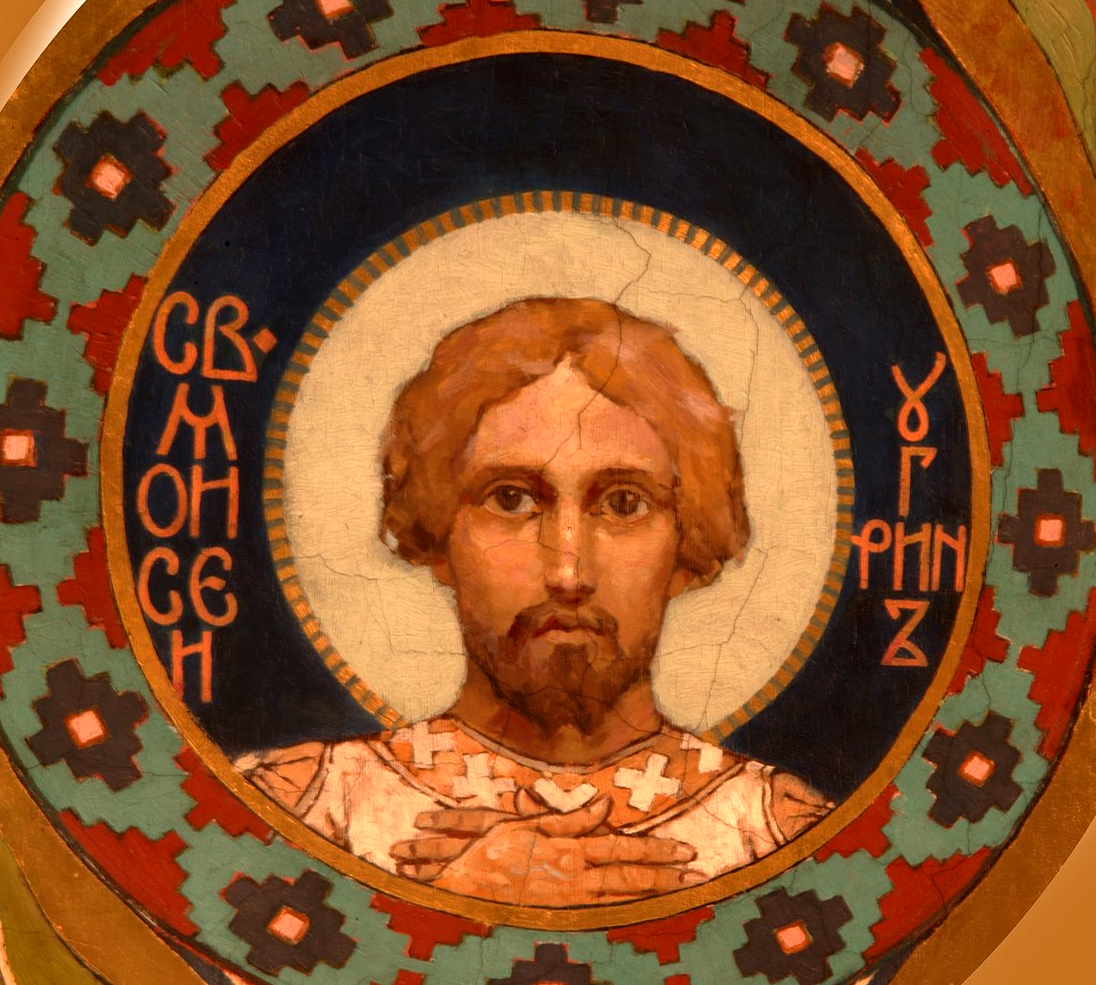
Moses the Hungarian was a Hungarian from Transylvania who served Prince Boris together with his brother George, the same George mentioned above. After Boris’s murder, Moses survived and went into hiding with Predslava, the sister of the future Prince Yaroslav.
In 1018, when the Polish king Bolesław I (Bolesław the Brave) took Kyiv, Moses was captured and taken to Poland. There he was sold into slavery to a noble Polish woman. She burned with passion for Moses, who “stood out for his strong build and handsome face,” while he himself remained indifferent to women.
For a full year the Polish woman persistently tried to force intimacy, resorting to various tricks: she “dressed him in costly garments, fed him exquisite foods, and, lustfully embracing him, urged him to intercourse.” Moses rejected her advances, tore off the fine clothes, and categorically refused to marry. His reply was:
“…and if many righteous men have been saved with their wives, I, a sinner, alone cannot be saved with a wife.”
— Dmitry of Rostov. “The Life of Our Venerable Father Moses the Hungarian”
One day she “ordered Moses to be forcibly laid upon her bed, where she kissed and embraced him; yet even by this she could not draw him to it.” Enraged by his refusals, she ordered him to be beaten every day, inflicting a hundred wounds. Finally, she commanded that Moses be castrated.
Later, during a revolt, Moses managed to escape and return to Kyiv. There he took monastic vows at the Kyiv Pechersk Monastery, and after his death he was canonized as a model of chastity.
Vasily Rozanov believed that behind the canonical form of the text there may lie the story of a person with a different sexual orientation who was punished for refusing a heterosexual marriage. He suggested that the Life can be read as an account of someone with an inborn and seemingly insurmountable aversion to women.
Same-Sex Relationships in Muscovite Rus'
Information about same-sex relationships in Muscovite Rus’ (15th–17th centuries) has come down to us mainly through church texts and the notes of foreign travelers. These sources show that such relations were condemned by the Church but were not usually singled out as a special crime separate from other moral offenses.
Most church epistles, except for the Stoglav (literally “Hundred Chapters”), did not carry the force of secular law. They were moral instructions aimed at maintaining a “proper” way of life from the Orthodox perspective.
In the Domostroi (literally “Household Order”), the “sin of Sodom” is condemned alongside other sins: gluttony, drunkenness, breaking the fast, witchcraft, and the performance of so-called demonic songs. Same-sex relations were part of a general catalog of moral deviations, not described as a distinct crime.
In the second half of the 15th century, the Kormchie books began to include a special sermon against “unnatural vices.” Its author demanded the death penalty for muzhelozhstvo (literally “lying with a man”), as well as for blasphemy, murder, and violence, stressing that such deeds should receive no mercy. However, this was a sermon expressing a moral position, not an actual church or state law. Such appeals had no legal force.
One of the prominent church authors of the 16th century was the priest Sylvester. In his sermons he sharply condemned court youths whom he considered effeminate. He was speaking of young men who shaved their beards, used cosmetics, and in his view violated the traditional male appearance.
In his Epistle to Tsar Ivan Vasilyevich (the Terrible), Sylvester also accused the Russian army during the Kazan campaign of spreading the “sin of Sodom.” He linked military failures and moral decline with sinful conduct.

One of the most active denouncers of the “sin of Sodom” in the early 16th century was Daniil, the Metropolitan of Moscow. In his admonitions he condemned not only men living with “fornicating women,” but also effeminate youths who, as he wrote, “…envying women, transformed their manly face into a woman’s. Or do you wish to be a woman entirely?” He described how they shaved their beards, plucked hair, used perfumes, and changed outfits several times a day.
In one sermon, Metropolitan Daniil told the story of a nobleman who, he said, had become so entangled in same-sex relationships that he came to him for spiritual help. The man confessed that he could not rid himself of feelings for his beloved, because his passion felt too strong. Daniil attributed this to demonic influence and advised avoiding not only women, but also youths who provoke “unclean thoughts.” For monks, he even proposed an extremely radical method of fighting temptation — self-castration — seeing it as a way to achieve complete deliverance from carnal desire.
The first time same-sex relations were directly addressed in an official normative document was the Stoglav of 1551, adopted under Ivan the Terrible. The Stoglav was a church–state compilation of one hundred chapters regulating matters of faith, ritual, and morality. It condemned the “sin of Sodom” as a grave violation of Orthodox norms, yet still allowed the possibility of repentance and correction.
The minimum punishment was voluntary confession, fasting, and a change of lifestyle. In more serious cases, a person could be temporarily excommunicated or forbidden to attend services, though even these measures could be lifted upon sincere repentance. Thus, the most severe consequence was spiritual death — the loss of communion with the Church — rather than physical punishment.
The Stoglav also drew attention to the practice of monks keeping young attendants. This was considered morally dangerous. The document forbade monks to “keep beardless lads alone” and recommended that, if servants were necessary, they should be older and bearded.
It is important to consider the meaning of the term itself. In this era, “sodomy” was understood far more broadly than today. The word referred not only to same-sex relations between men, but to any sexual practices not connected with procreation — including bestiality, masturbation, and anal sex with a woman. Therefore, mentions of “sodomy” in sources do not always refer specifically to homosexuality.
The Novgorod Petition of 1616
The Novgorod petition (chelobitnaya) of January 5, 1616 is one of the few Russian documents connected with the topic of same-sex relations. A chelobitnaya — a formal written petition to the authorities — was drawn up in Veliky Novgorod. At that time, the city was under occupation by Swedish troops, which is why the document later ended up in a Swedish archive. It was published in the early 1990s.
The author of the petition accuses a certain Fyodor of having, four years earlier, taken advantage of his childhood and coerced him into homosexual relations. Now, the petitioner says, Fyodor is threatening to tell his father and is demanding money for silence.
The complaint is aimed not so much at the fact of “sodomy” itself as at the violence, deception, and subsequent blackmail. This is clear both from the content and from how the author structures his account.
“…Fyodor sent me raisins and apples, saying, ‘These are presents for you from me’; and I, Your Majesty, at that time was foolish and small and mute, and I took his raisins and apples; and I, Your Majesty, believed that he truly was sending me raisins and apples as gifts. And I began, Your Majesty, to think that this Fyodor was drawing close to me [seeking friendship], and he wished to commit an indecent act with me, so that I would commit an indecent act with him; and I, Your Majesty, at that time was foolish and small and mute, and I did not dare tell my father; and I, Your Majesty, against my will committed fornication with him.
And when, Your Majesty, I became bigger [grew older], and my wits, Your Majesty, increased, then I, Your Majesty, said to him at that time: ‘Go away from me, Fyodor, be gone.’ And he, Your Majesty, grew rude, and he caused my father a loss, having it, Your Majesty, assessed against me in Great Novgorod — without cause — at thirty-eight rubles. And for me, Your Majesty, being in a foreign town, I did not wish to quarrel with him; I reconciled with him, and I gave him, Your Majesty, three rubles of money for nothing; and altogether, Your Majesty, this loss in Great Novgorod came to me … eight rubles…”
— “Petition about being forcibly induced to sodomy, with a complaint against a certain Fyodor” (missing beginning). January 5, 1616
A brief retelling in modern language: Fyodor sent the boy raisins and apples and called them presents, while the boy, being young and inexperienced, accepted them without understanding the intentions. Then Fyodor tried to get him to commit a “sin,” and the author admits that under coercion he did not tell his father and submitted. Later, when he grew older and understood what was happening, he demanded that Fyodor leave him alone, but Fyodor began threatening and extorting money. To avoid a quarrel and a lawsuit on foreign territory, the boy paid him off with three rubles, and the total damage, he says, amounted to eight rubles.
How the story ended, and whether Fyodor was punished, is unknown.
Foreign Observers on “Sodomy” in Muscovy
A significant part of the information about same-sex relations in 16th–17th-century Muscovy survives in the texts of foreign authors — travelers, diplomats, physicians, and historians. These accounts matter not only as an outside view of Russian society, but also as an indication that the topic was noticeable to visitors and regularly appeared in their descriptions.
One of the early accounts belongs to the Italian historian Paolo Giovio. In 1551 he published a series of books, Descriptions of Men Famous for Martial Valor, in which, relying on stories from Russian ambassadors and merchants, he described the Muscovite state in the time of Vasily III. In this context he also mentioned same-sex relations among Russians, linking them to an “entrenched custom” and comparing them to “the manner of the Greeks”:
“…according to a custom long rooted among the Muscovites, it is permitted, in the manner of the Greeks, to love youths; for the noblest among them — and all ranks of the knightly estate — are accustomed to take into their service the children of respectable townsmen and instruct them in the military arts.”
— Paolo Giovio. “Descriptions of Men Famous for Martial Valor.” 1551
The remark about “the Greeks” reflects a stereotype widespread in Europe at the time: in Western tradition, Byzantium and the “Greek world” were often portrayed as especially licentious.
The researcher I. Yu. Nikolaeva offered an explanation of why the topic of same-sex practices and other “indecent” passions appears so insistently in European accounts of Muscovy. In her view, it was not only that visitors tended to moralize about a foreign country. She considered it significant that in Muscovy itself this sphere remained outside the kind of harsh criminal repression that was characteristic of Western Europe. She puts it this way:
“…it is precisely for this reason that in virtually all foreigners’ accounts attention is drawn to the Muscovites’ ‘indecent’ passions: in Russian society this phenomenon was not repressed to the extent it was in Western Europe, where a more favorable socio-psychological climate developed for corresponding cultural-psychological mutations.”
— I. Yu. Nikolaeva. “The Problem of Methodological Synthesis and Verification in History in the Light of Contemporary Concepts of the Unconscious.” 2005
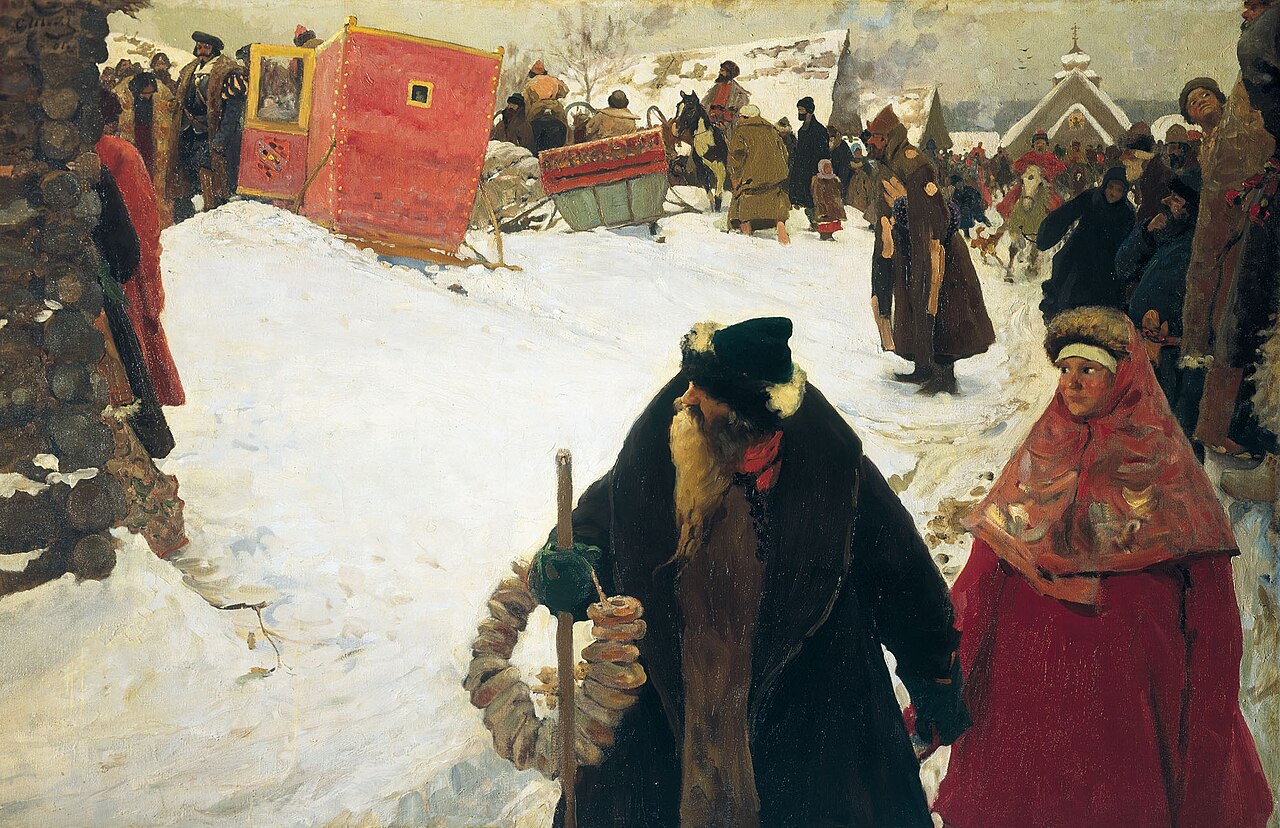
In 1568, the English poet George Turberville arrived in Russia as part of a diplomatic mission. He set down his impressions in poetic letters. In one of them he also mentioned homosexuality among Russians, writing in a tone of condemnation and astonishment:
“The monster more desires a boy within his bed,
Than any wench — such filthy sin ensues a drunken head.”
— George Turberville. Poetic letter to a friend. 1568
The Swedish diplomat and historian Petrus Petreius (Peter Petrei de Erlezunda), who served several years as an envoy in the Russian state, wrote in his work on the times of Ivan IV and the Time of Troubles that same-sex relations were found among Russian boyars and the gentry. In his words, “…especially the great boyars and nobles commit… sodomitic sins, men with men.”
He was particularly outraged that such actions, as he claimed, went unpunished and did not provoke public condemnation. Moreover, he wrote that “…boyars and nobles… consider it an honor to do this [male intercourse], without shame and openly.”
A similar point was made by Samuel Collins, an English physician at the court of Tsar Alexei Mikhailovich. Speaking of “sodomy and male intercourse,” he emphasized that in Russia it was treated more leniently than in England because, as he wrote, “it is not punished here by death.” Collins even asserted that Russians are “inclined to it by nature.”
The same kind of outrage appears in the words of Yuri Krizhanich, a Croatian priest who lived in Russia in 1659–1677:
“…here, in Russia, they simply joke about such a loathsome crime, and nothing is more common than that, publicly, in jesting conversations, one boasts of the sin, another reproaches someone else, a third invites another to the sin; all that is lacking is that they commit this crime before all the people.”
— Yuri Krizhanich, a Croatian priest who lived in Russia in 1659–1677
Such assessments fit the typical early modern habit of explaining behavior through “national character” — supposedly innate traits of an entire country.
Yet the very fact that foreign observers kept returning to this topic is telling: in their perception, it was conspicuous and distinguished Muscovy from the Western Europe they knew.
This contrast becomes clearer against the backdrop of Western European practice in the 16th–17th centuries. In many Western European countries, same-sex relations were prosecuted as a criminal offense, and punishments could be extremely brutal — up to the death penalty, including burning at the stake. Against that background, foreigners were particularly struck that in Russia such “sins,” in their view, did not entail such severe punishment.
An additional layer of hostile perceptions of Muscovy was also at play. In the eyes of many Europeans, Russians were described stereotypically — as “savages,” pagans, and “schismatics,” people who were considered apostates from the “true” faith.
Such labels intensified the general negative attitude toward Russia and made moral accusations sharper. Protestants in particular often spoke harshly against Russia, calling Russians “the most irreconcilable and terrible enemies of Christianity.”
One source from the turn of the 17th–18th centuries, already the beginning of the Petrine era, is also known. In a report from 1699, the Jesuit Franciscus Emilian wrote:
“The boyars who returned from our lands brought many foreigners with them, among whom the greatest trouble has been caused us by the young men of our faith, because they were corrupted. These sins that cry out to heaven are very common here, and no more than four months ago some boyar, at table and in company, boasted that he had corrupted only 80 young men.”
— Franciscus Emilian. Report. 1699
Homosexuality Among Russian Tsars
In the pre-Petrine era, there are reports suggesting the possible homosexuality of certain Russian tsars, though their reliability remains disputed.
Rumors circulated about Vasily III, some of them recorded by foreign contemporaries. These accounts mentioned “effeminate youths” at court and speculated about his same-sex relationships due to the barrenness of his wife.
Ivan IV the Terrible was linked to his cupbearer Fyodor Basmanov. Basmanov rose rapidly at court and played a prominent role in the oprichnina. His sudden ascent and the conflicting reports surrounding his death gave rise to various interpretations of the nature of their relationship.
There is also an early 17th-century testimony containing accusations of the “sin of sodomy” against the first tsar of the Romanov dynasty — Mikhail Fyodorovich. This is the statement of Mikhail Klementyev, a Novgorod nobleman who in 1616 defected to the Swedish side during Russo-Swedish negotiations. His testimony was recorded and preserved in the Swedish National Archives.
Klementyev had previously served with the Russian embassy, was well acquainted with the situation in the country, and presented the Swedish commissioners with his view of internal affairs in the Muscovite state during the first years of the new dynasty. Among other things, he portrayed the personal qualities of the twenty-year-old tsar in extremely negative terms, attributed to him a propensity for “sodomitic” acts, and claimed that such behavior had become commonplace at court.
“…by nature he has a coarse and limited mind, and moreover is more inclined to godless and vile deeds of a sodomitic kind than to Christian virtues; therefore they say that these unheard-of sodomitic deeds are becoming part of daily custom here.”
— Mikhail Klementyev, statement of 1616
Before Peter the Great
By the end of the Muscovite period, the Russian Tsardom adopted a major new law code — the Sobornoye Ulozhenie (the Council Code) of 1649. This document became the foundation of legislation for almost two centuries and remained in force until 1835. It contains no mention of homosexuality. Questions of same-sex relations remained within the sphere of religious and moral frameworks.
This does not mean that Russian society was unaware of same-sex relations. Sources show they had been known since ancient times. But it would be wrong to speak of full tolerance. Same-sex relations were condemned, yet more often remained within the sphere of moral supervision, church admonition, and a religious understanding of sin — rather than strict legal regulation.
Female homosexuality in that era was perceived as a form of masturbation rather than as an independent type of relationship. Patriarchal ideas of the time excluded women from the ranks of full participants in public life. As a result, sexual relations between women drew little interest from either society or the state. No detailed sources on female homosexuality in Russia of that period have survived.
The first criminal punishment for same-sex relations in Russia — though only in the army — was introduced by Peter the Great. This happened under the influence of Western European legal ideas that he actively borrowed while restructuring the state and the military. More on this in the next article:
References and Sources
- Димитрий Ростовский. «Житие преподобного отца нашего Моисея Угрина». [Dmitry of Rostov – The Life of Our Venerable Father Moses the Hungarian]
- Домострой. Памятники литературы Древней Руси. Середина XVI века. 1985. [Domostroi]
- Емченко Е. Б. Стоглав: исследование и текст. 2000. [Emchenko, E. B. – The Stoglav: Study and Text]
- Горсей Дж. Записки о России, XVI – начало XVII в. 1990. [Jerome Horsey – Notes on Russia, 16th–Early 17th Centuries]
- Гудзий Н. К., сост. Хрестоматия по древней русской литературе XI–XVII веков для высших учебных заведений. 1952. [Gudzii, N. K. – Reader in Old Russian Literature (11th–17th Centuries) for Higher Education]
- Жмакин В. И. Митрополит Даніил и его сочиненія. 1881. [Zhmakin, V. I. – Metropolitan Daniil and His Writings]
- Жмакин В. И. Русское общество XVI века. 1880. [Zhmakin, V. I. – Russian Society in the 16th Century]
- Кон И. С. Лунный свет на заре: лики и маски однополой любви. 1998. [Kon, I. S. – Moonlight at Dawn: Faces and Masks of Same-Sex Love]
- Конева М. А. Преступления против половой неприкосновенности и половой свободы, совершаемые лицами с гомосексуальной направленностью: автореферат диссертации. 2002. [Koneva, M. A. – Crimes Against Sexual Integrity and Sexual Freedom Committed by Persons with a Homosexual Orientation: Dissertation Abstract]
- Кудрявцев О. Ф. Россия в первой половине XVI в.: взгляд из Европы. 1997. [Kudriavtsev, O. F. – Russia in the First Half of the 16th Century: A View from Europe]
- Материалы из шведского архива: Riksarkivet, SE/RA/754/2/VII, no. 1282, f. 23. [Riksarkivet: Swedish Archival Materials (SE/RA/754/2/VII, no. 1282, fol. 23)]
- Николаева И. Ю. Проблема методологического синтеза и верификации в истории в свете современных концепций бессознательного. 2005. [Nikolaeva, I. Yu. – Methodological Synthesis and Verification in History in Light of Modern Concepts of the Unconscious]
- Павлов А. С., ред. Памятники древнерусского канонического права. 1908. [Pavlov, A. S. – Monuments of Old Russian Canon Law]
- Письма и донесения иезуитов о России конца XVII и начала XVIII века. 1904. [Letters and Reports of Jesuits on Russia (Late 17th–Early 18th Centuries)]
- Розанов В. В. «Люди лунного света». 1911. [Rozanov, V. V. – People of Moonlight]
- Клементьев М. Русское государство после Смуты глазами новгородского дворянина. Новгородский исторический сборник. Вып. 4 (14). 1993. [Klementyev, M. The Russian State after the Time of Troubles Through the Eyes of a Novgorod Nobleman. Novgorod Historical Collection, issue 4 (14), 1993.]
- Collins, S. The Present State of Russia. In a Letter to a Friend at London; Written by an Eminent Person residing at the Great Czar’s Court at Mosco for the space of nine years. 1671.
🇷🇺 LGBT History of Russia
General history
- Homosexuality in Ancient and Medieval Russia
- The Story of a Medieval Arabic Source in Which the Women of the 'Rus' Were Called the World's First Lesbians
- The Homosexuality of Russian Tsars Vasily III and Ivan IV the Terrible
- Peter the Great’s Sexuality: Wives, Mistresses, Men, and His Relationship with Menshikov
- Homosexuality in the 18th-Century Russian Empire — Homophobic Laws Borrowed From Europe and How They Were Enforced
- Russian Empress Anna Leopoldovna and the Maid of Honour Juliana: Possibly the First Documented Lesbian Relationship in Russian History
Folklore
Biographies
- Saint Moses the Hungarian – One of the First Queer Figures in Russian History?
- Grigory Teplov and the Sodomy Case in 18th-Century Russia
- Russian Poet Ivan Dmitriev, Young Favourites, and Same-Sex Desire in the Fables 'The Two Doves' and 'The Two Friends'
- The Diary of Pyotr Medvedev, a Bisexual Moscow Merchant, 1854–1863
- Sergei Romanov: A Homosexual Member of the Imperial Family
- The Possible Homosexuality of Grand Duke Nikolai Mikhailovich of the Romanov Family
- Andrey Avinoff: A Russian Émigré Artist, Gay Man, and Scientist
 Subscribe to our Telegram channel (in Russian): Urania. With Telegram Premium, you can translate posts in-app. Without it, many posts link to our website, where you can switch languages — most new articles are published in multiple languages from the start.